This week’s three lessons share a common thread: business English. Two of them — Apologizing and Making Excuses, and Keeping a Conversation Going — focus on the workplace conversation skills that come up in meetings, with colleagues, and in the corridors between them. They complement the materials on my Socializing and Small Talk page. The third, Semiconductors, is a pre-intermediate (and above) lesson built around a story about technology and global logistics — how the chips in our phones and cars get made, and who's making them.

Apologizing and Making Excuses
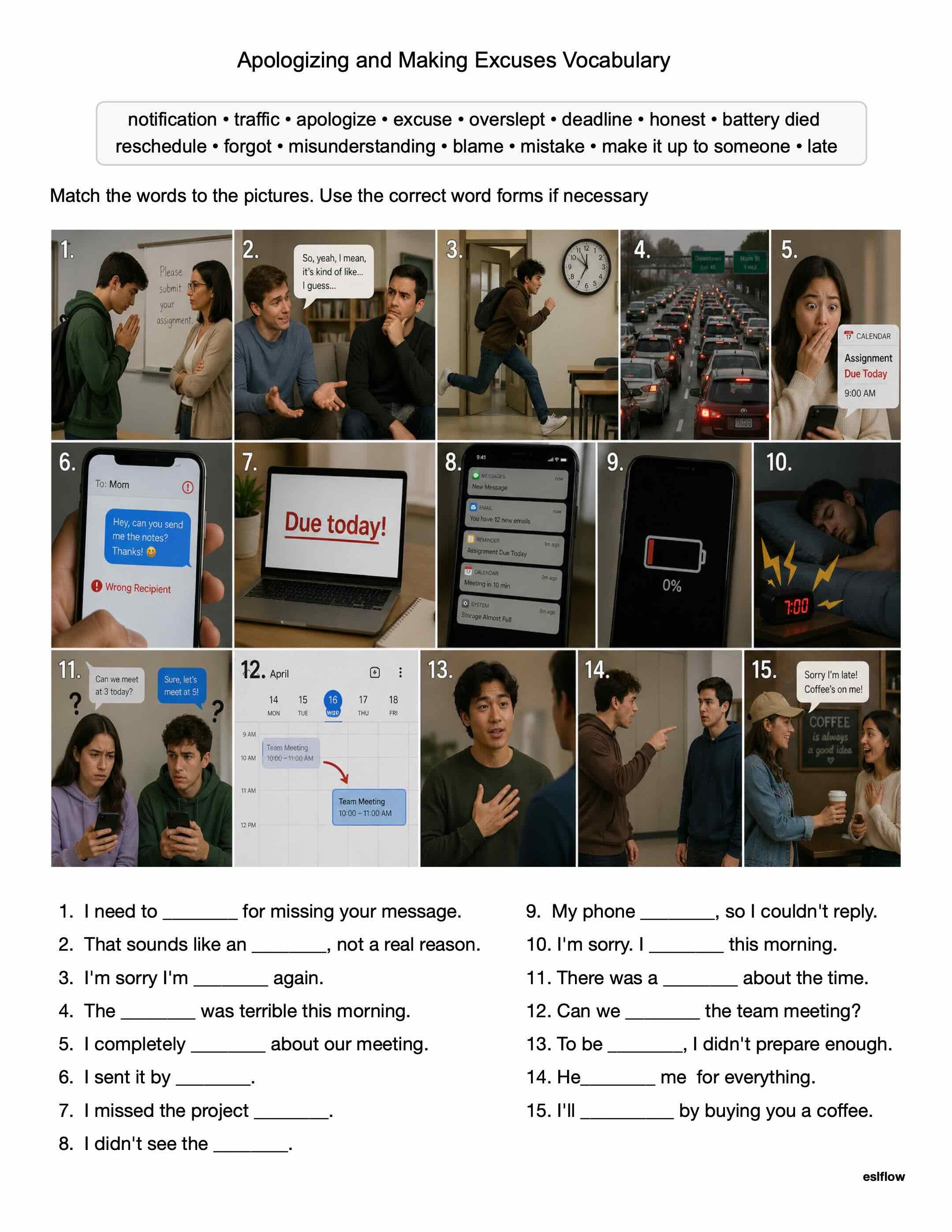
A lesson on saying sorry at work and at home, and on the related territory of making excuses, avoiding blame, and softening bad news.Sub-topics include apologies at work, apologies in daily life, and the line between excuses and honesty. Pitched at high elementary and above, with role plays, opinion-completion exercises, and a chart reading on how people respond to different kinds of apologies.
Keeping a Conversation Going
The skills that turn a polite exchange into an actual conversation — asking follow-up questions, picking up threads, handling awkward silences, and knowing when to listen. The kind of conversation that builds rapport with colleagues, clients, and people you’ve just met at a conference. Includes a Communication Coach role play, a Speed Friending Talk Zone, a People-Chatting-Everywhere picture activity, and graph reading on small talk habits. High elementary and above.
Semiconductors
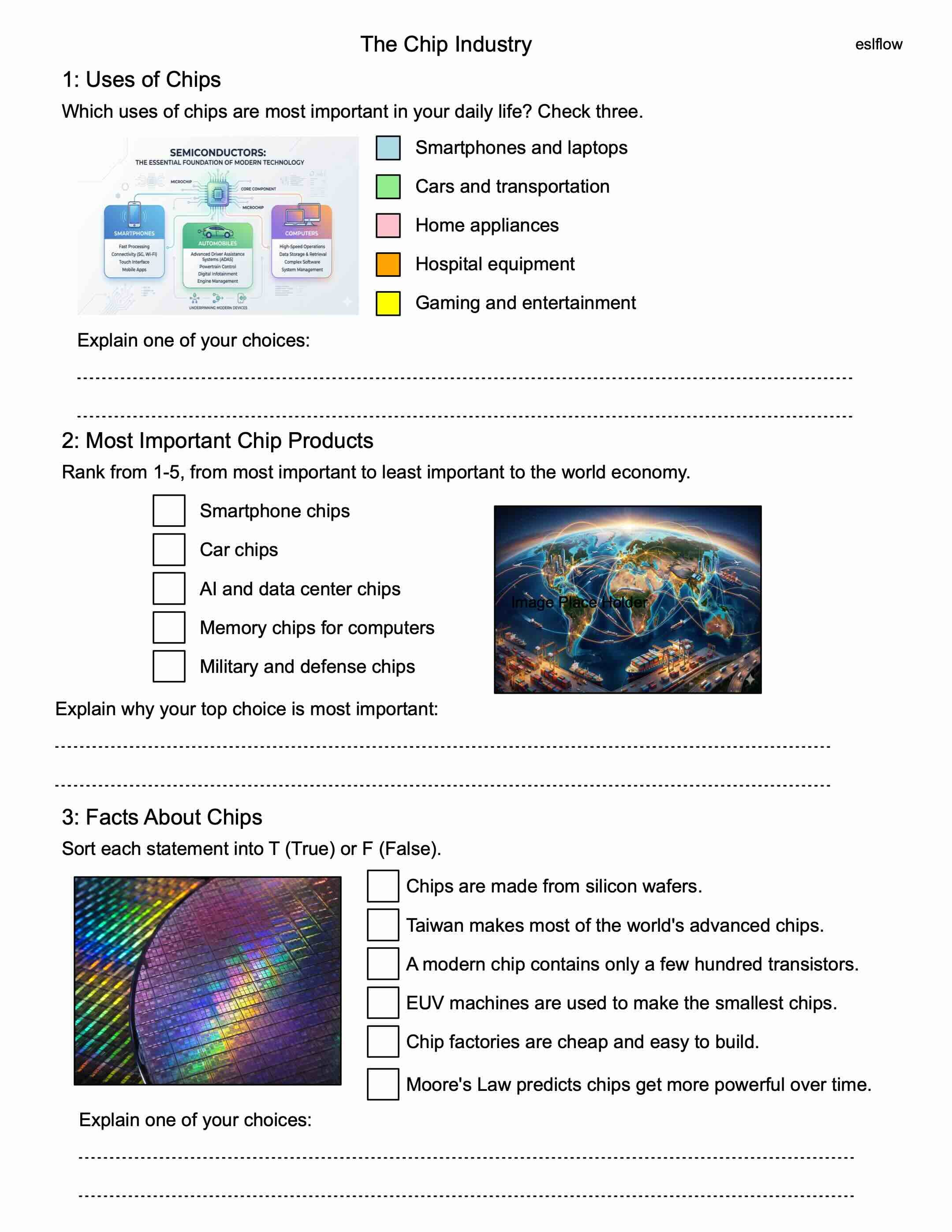
An accessible business English lesson on the chip industry — how semiconductors are designed, where they’re made, and why a few small companies and one small island end up at the center of global politics. Sub-topics include chip technology progress, the chip industry, and global chip politics, plus a Skills Gap role play, that ties the language to emerging tech-industry hiring issues. Pre-intermediate and above.
Apologizing and Making Excuses Vocabulary
Keeping a Conversation Going
The Chip Industry - Critical Thinking