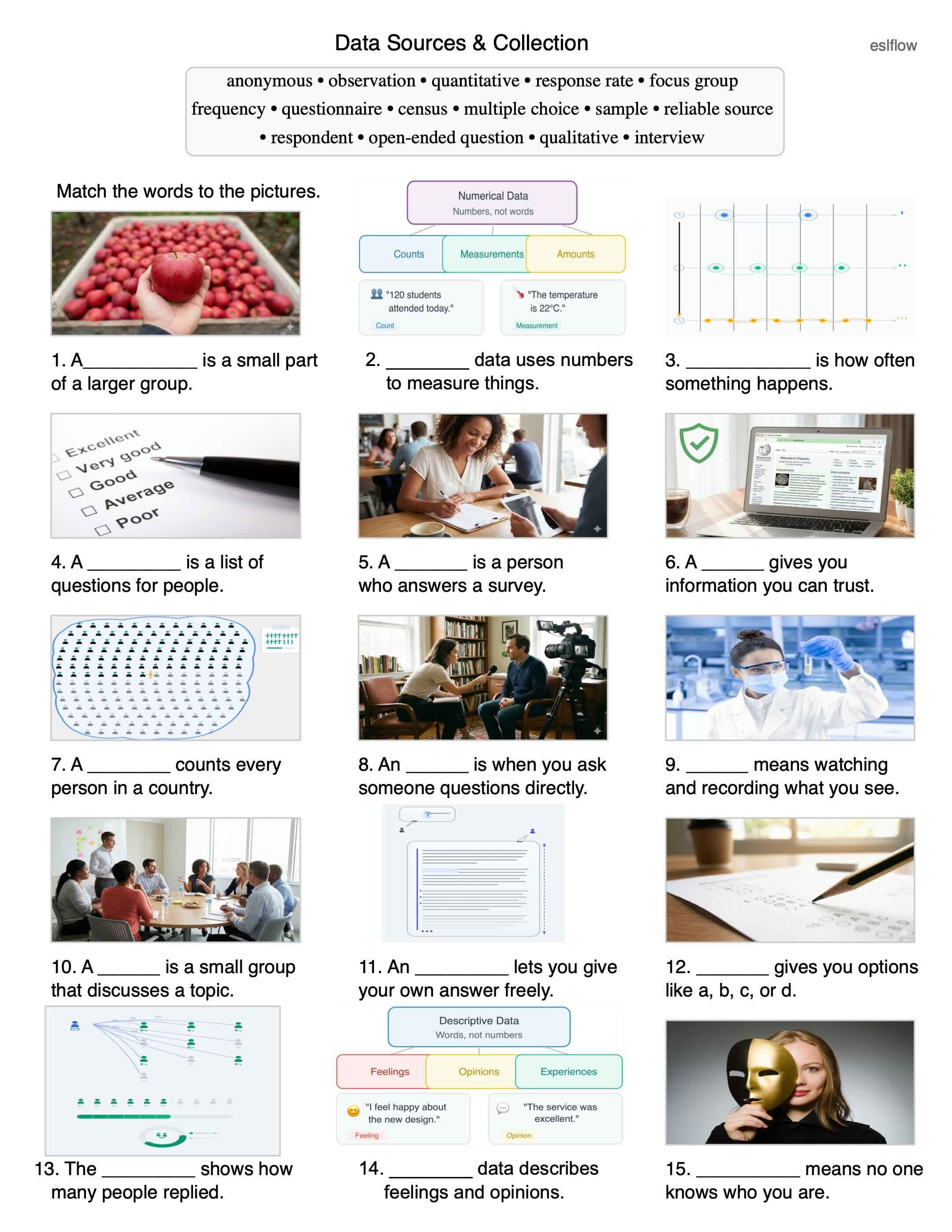
You can’t fix what you can’t measure. Cities need water data to make long-term planning decisions. Farmers need irrigation data to grow food. Engineers need survey results to decide where to build a desalination plant. The vocabulary of data collection—samples, response rates, reliable sources, bias—is the vocabulary of solving real problems. And the global water crisis is one of the most urgent problems your students will talk about in English.
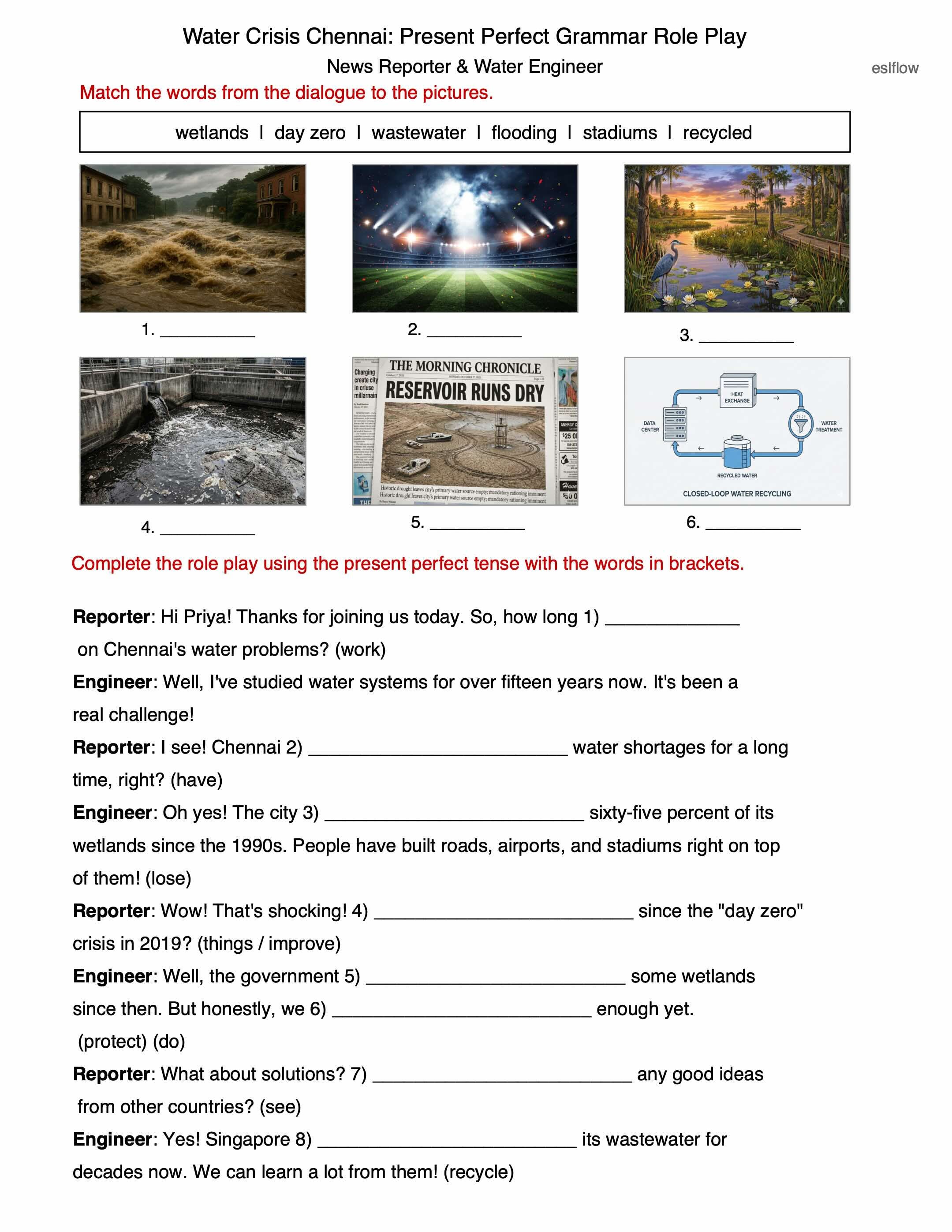
Problem: The Future of Water is about environmental awareness. Chennai, India paved over 65% of its wetlands, and the taps ran dry. Students build vocabulary around wetlands, droughts, desalination, pipelines, and irrigation, then talk about which water project deserves their town’s budget.
Solution: Data Collection and Sources picks up where Data Science Fundamentals left off. Students move from understanding data to understanding how it’s gathered—questionnaires, samples, focus groups, bias, and what makes a source reliable. They explore these methods through a café market research role play, an AI careers survey, and a Health Data Investigator task where they choose the right approach to track a disease outbreak

Water Crisis Chennai: Present Perfect Grammar Role Play
Data Sources and Collection Visual Vocabulary