
Today's post content includes:
8 customer service scenarios with role-play cues, multiple-choice questions, and audio files
5 language skills exercises including requests, collocations, and critical thinking
2 pronunciation exercises - word stress and syllable stress
Paid subscribers have access to download the complete materials at the end of the post.
As chatbots and other digital and automated customer services proliferate, face-to-face human interactions increase in value. Many customers continue to prefer in-person interactions for transactions and services, as these allow businesses to create memorable, personalized experiences that build brand loyalty. Moreover, the personal touch helps companies differentiate themselves in an increasingly automated marketplace. Below are diverse exercises focusing on customer service interactions, including listening and speaking practice, vocabulary, grammar, collocations, and critical thinking..
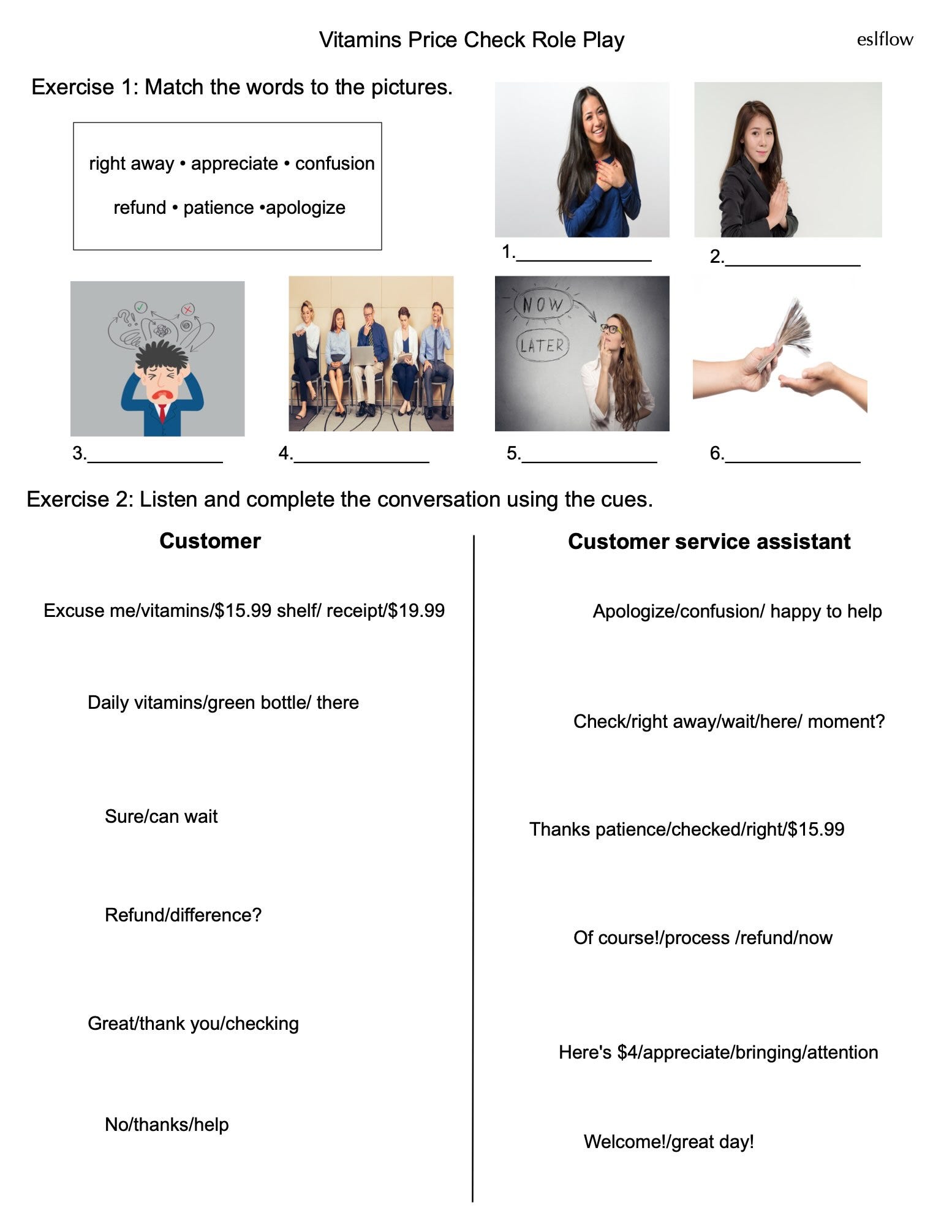
Vitamins Price Error Role Play
This first example demonstrates the importance of human touch (soft skills) in customer service through a role-play activity centered on a common retail scenario: price discrepancies between digital and in-person shopping experiences. As stores increasingly rely on electronic price tags and scanning systems, mismatches between shelf prices and register charges have become more frequent, making human intervention especially important in resolving these situations.

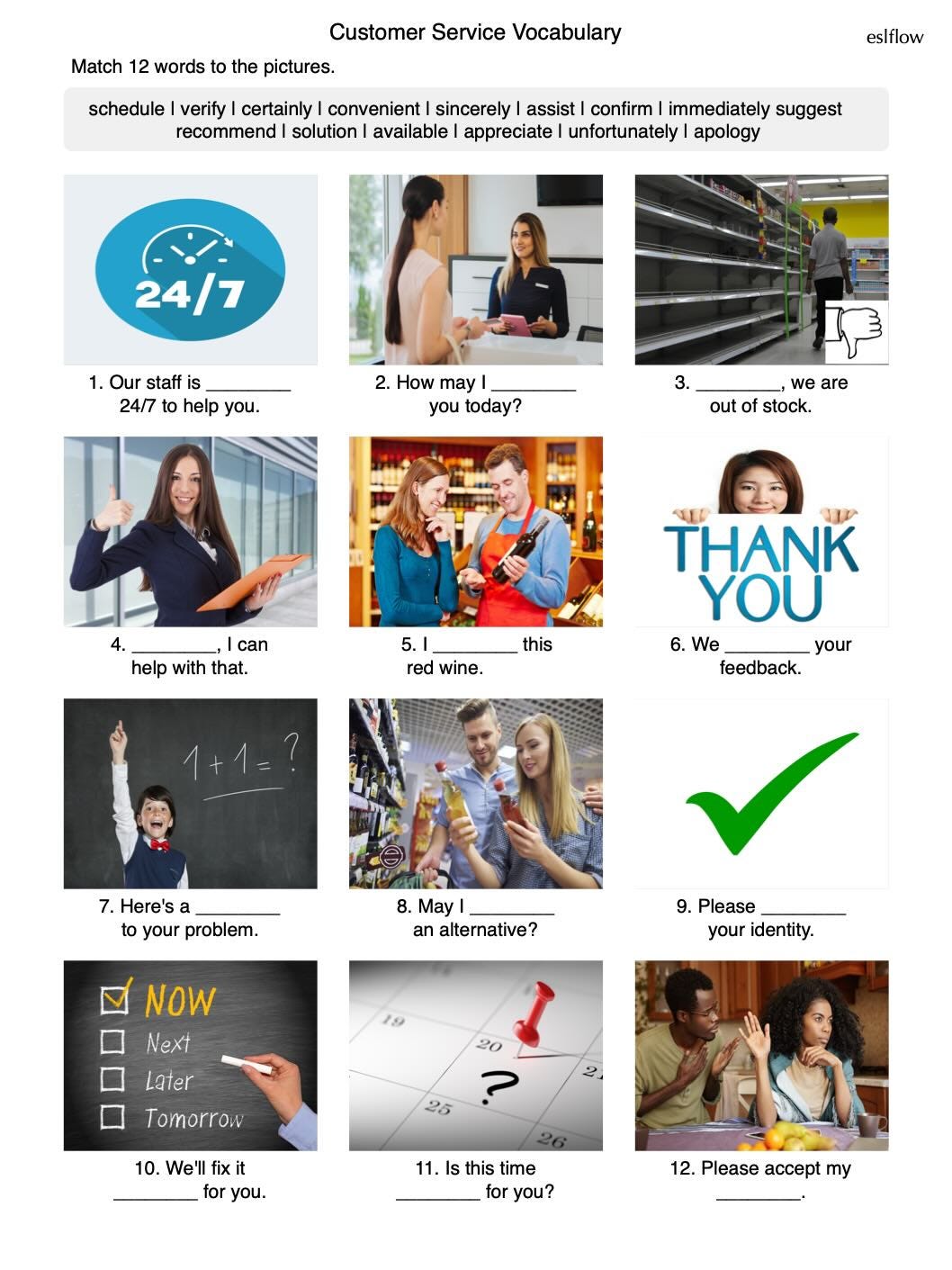
Customer Service Visual Vocabulary
This activity focuses on essential words commonly used in personal customer interactions. Whether customer service providers are helping customers choose products, solving problems, or making customers feel welcome, these key phrases demonstrate active listening and engagement.
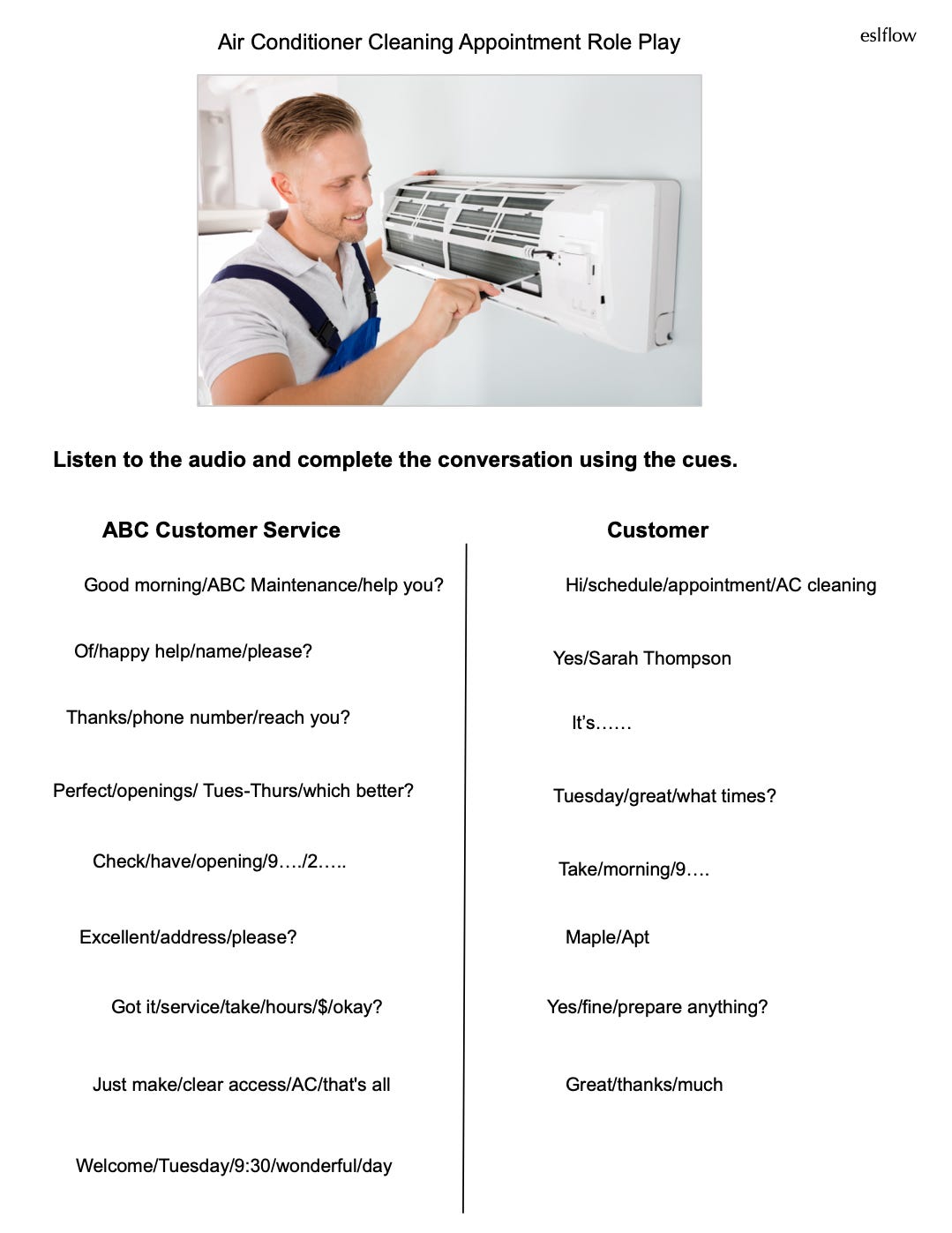
Air Conditioner Cleaning: Making an Appointment
Another example highlighting the value of human connection in customer service is this air conditioner cleaning appointment role-play scenario. Like our previous examples, this exercise focuses on essential vocabulary commonly used in face-to-face service encounters. Whether staff members are scheduling appointments, confirming details, or addressing customer questions, certain phrases recur consistently in these personal interactions. Through practicing high-frequency expressions such as "How may I assist you?", "Let me check that for you," and "Is that convenient?", students develop the communication skills necessary for handling real-world service situations.
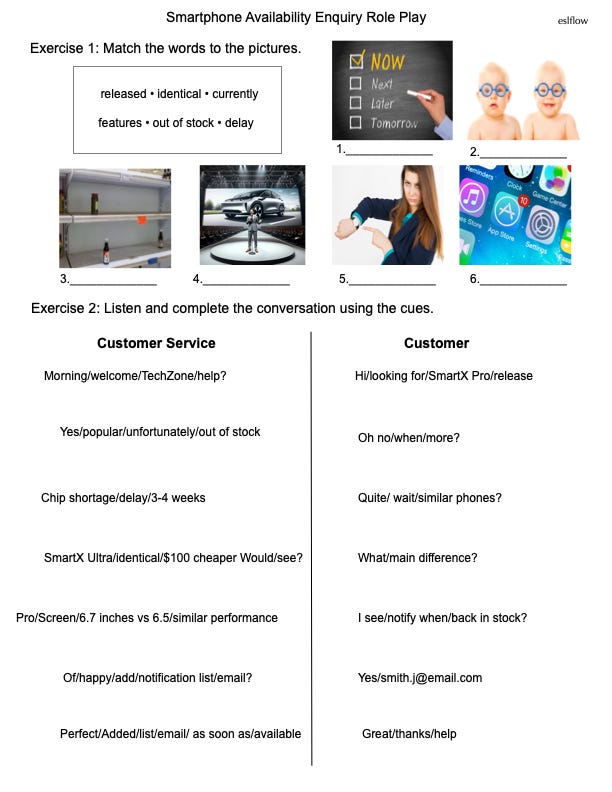
Smartphone: Out of Stock
The human touch is particularly valuable when handling product availability issues. While automated systems can display inventory status, this scenario demonstrates how skilled staff can transform potentially frustrating "out of stock" situations into positive customer experiences. The dialogue illustrates effective communication strategies for explaining availability issues, suggesting alternatives, and offering solutions like notification systems—all interactions that benefit from a personal approach. Through practicing phrases such as "Unfortunately, we're out of stock," "Would you like to see an alternative?" and "I'd be happy to add you to our notification list," students learn to handle inventory discussions professionally and empathetically.
Supermarket Enquiries
Personal customer service in supermarkets involves essential daily interactions between staff and customers. This scenario focuses on key phrases and questions that facilitate smooth, natural conversations in a retail setting. Customers inquire about product locations, prices, and store hours, using expressions that appear consistently in these face-to-face exchanges. The vocabulary and dialogue patterns reflect authentic interactions that occur countless times daily across supermarket aisles, helping students master retail service communication.
Collocations Exercises
Customer service interactions rely heavily on requests and imperatives at varying levels of formality. These exercises build upon the language practiced in the previous listening activities, helping students master appropriate politeness levels for different service situations. The practice ranges from direct instructions found in self-checkout systems to courteous requests used in face-to-face interactions. Students learn how language choices shape customer experience, from simple commands like "Press the green start button" to polite requests such as "Would you mind providing your ID?"
Contents
Customer Service Language Skills
1. Customer Service Critical Thinking
2. Customer service G5 Requests
3. Customer Service Visual Vocabulary
4. Customer Service Vocabulary Quiz
5. Customer Service Imperative and Collocations
Customer Service Listening/ Speaking Skills
1. Air conditioner cleaning - making an appointment
2. Calling to complain - wrong delivery
3. Gift shop role play - asking prices
4. Pharmacy Role Play - Blood Sugar Monitor - first time purchase
5. Self Service Role Play - Imperatives
6. Smartphone Role Play - out of stock
7. Supermarket role play - customer queries
8. Vitamins price role play - price check
9. Pronunciation
