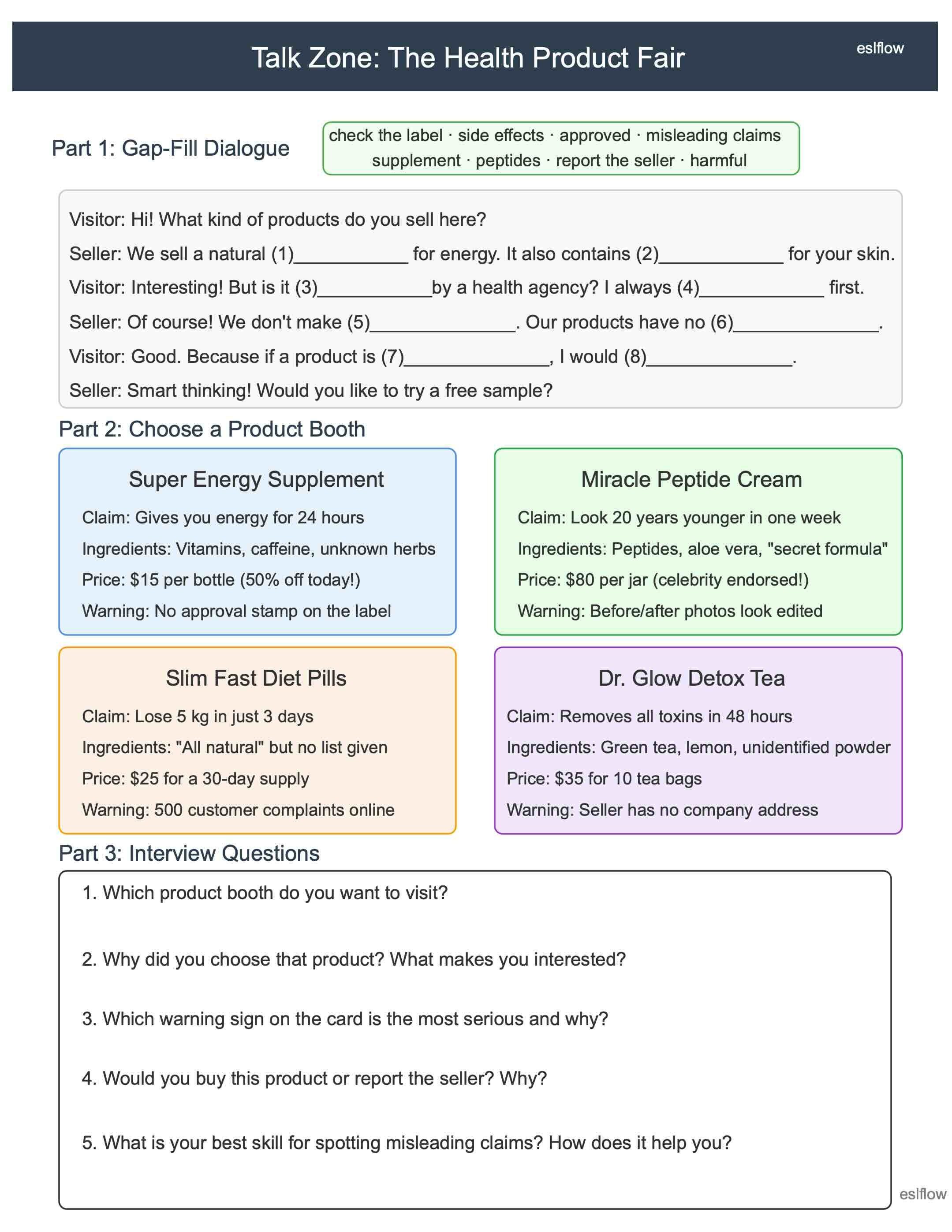
A cheap designer bag. A peptide cream that erases wrinkles. These days, fake products flood social media feeds faster than regulators can flag them — and the language of consumer protection has become everyday English. We all compare prices, read labels, spot misleading claims, and decide who to trust online.
These two new lessons turn that reality into classroom material. Fake Fashion explores counterfeits, knockoffs, and smart shopping through dialogues, conditionals practice, data interpretation, and a detective activity where learners weigh the evidence on suspicious products. Fake Health & Wellness Products looks at unapproved supplements, misleading marketing, and unproven healthcare trends. Both lessons run through brainstorming, visual vocabulary, listening/speaking, language, grammar, pronunciation, and graph work, with a variety of critical thinking exercises.

Fake Fashion Listening Intro Quiz
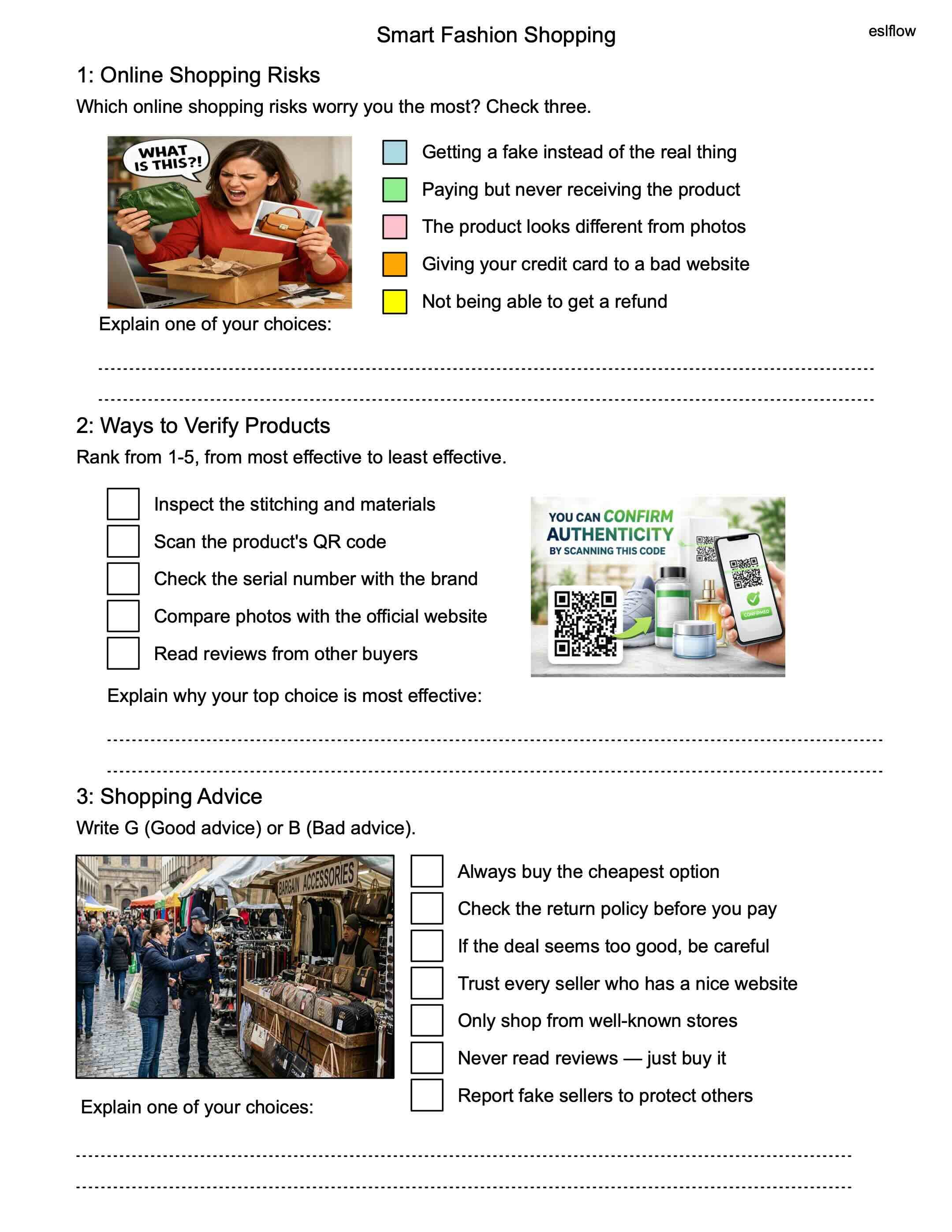
Smart Fashion Shopping Critical Thinking
Fake Health Products: Word Formation Role Play

Talk Zone: The Health Product Fair