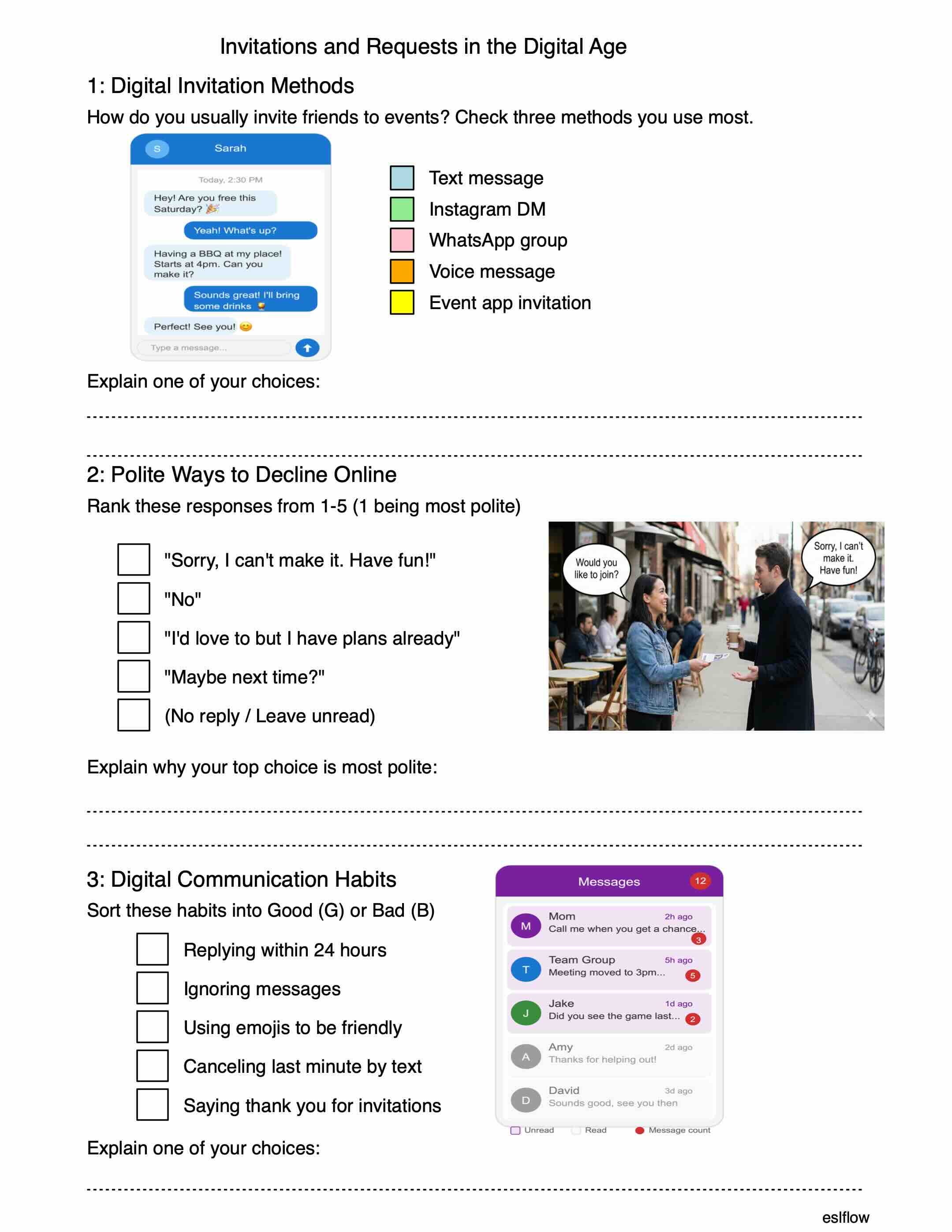
Invitations and Requests In Person and Online
17 activities
At first glance, invitations and requests might seem like textbook basics. But the ways we now communicate—group chats, polls, location sharing, formal emails versus quick texts—make this a surprisingly rich topic, one that touches on politeness, technology, and how social norms shift between screens and real life.
This lesson brings that variety into the classroom with vocabulary matching, dialogue practice, pronunciation work, collocations, role plays, and critical thinking about how tone shifts across contexts.

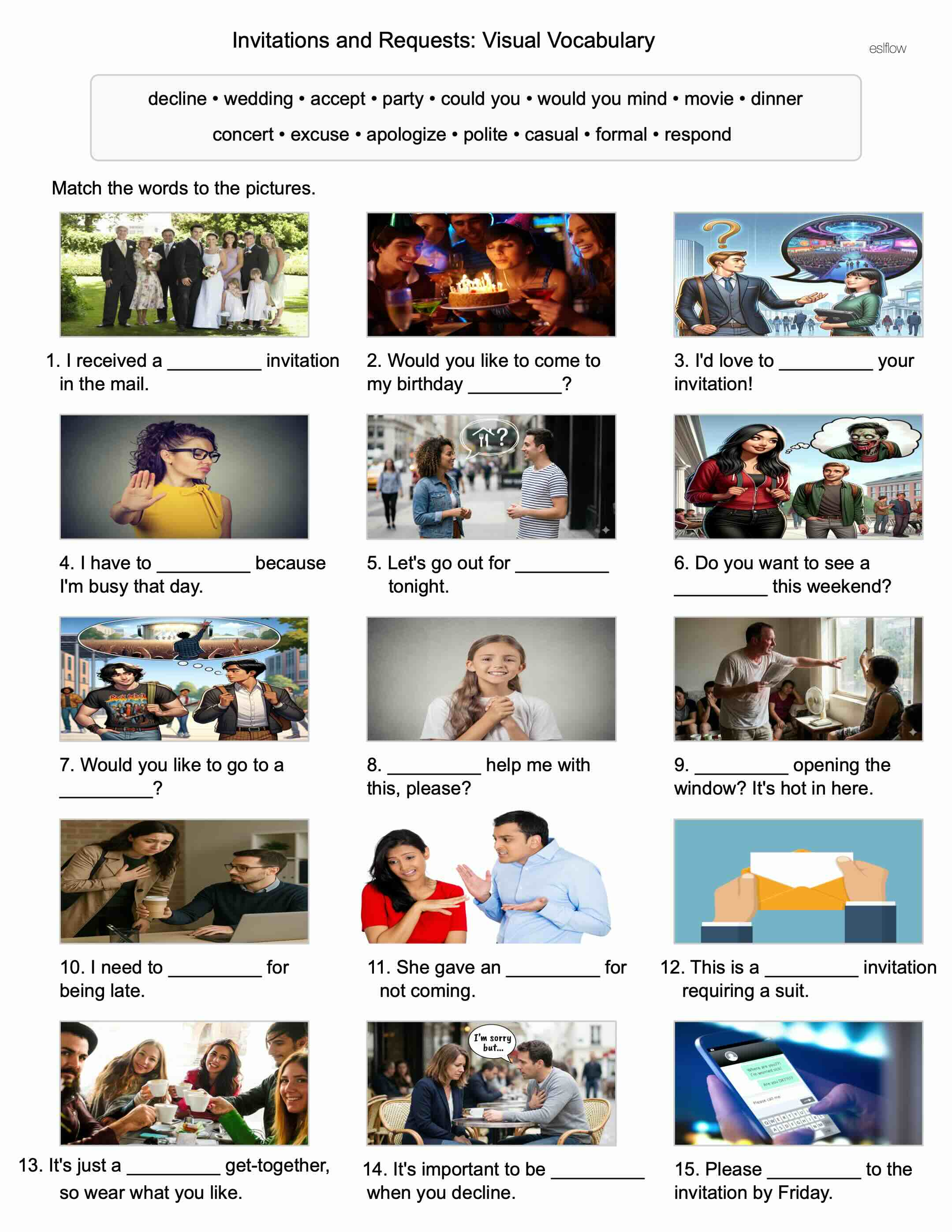
Visual Vocabulary
Some topics are particularly suited to visual vocabulary. Invitations and requests are brief social exchanges where body language and quick impressions matter—making visuals especially helpful for understanding context.
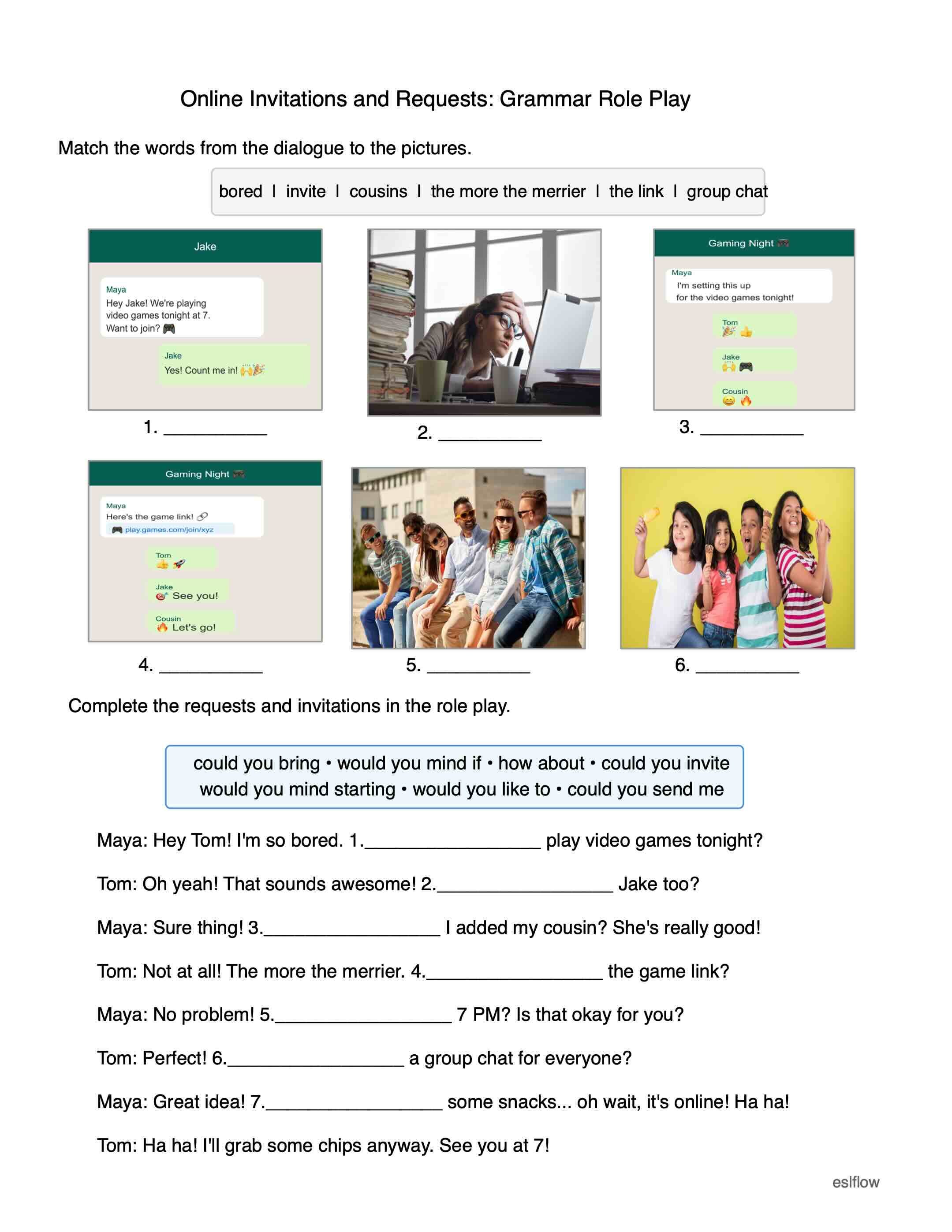
Online Gaming Invitation Grammar Role Play
“Would you like to...” versus “Do you want to...” - is there really a difference? What changes when someone says “Could you invite Jake?” instead of “Invite Jake”? This dialogue between friends setting up a gaming night is full of these choices. It’s a chance to notice the patterns English speakers use when making requests and invitations in person and online, and to think about what effect each style creates.
Critical Thinking
Again, students can examine their own digital communication choices - how they invite, how they decline, what they consider good etiquette. The goal is comparison and reflection, not finding one correct answer.