Note: Paid subscribers can download all 4 complete lesson packages at the end of the post.
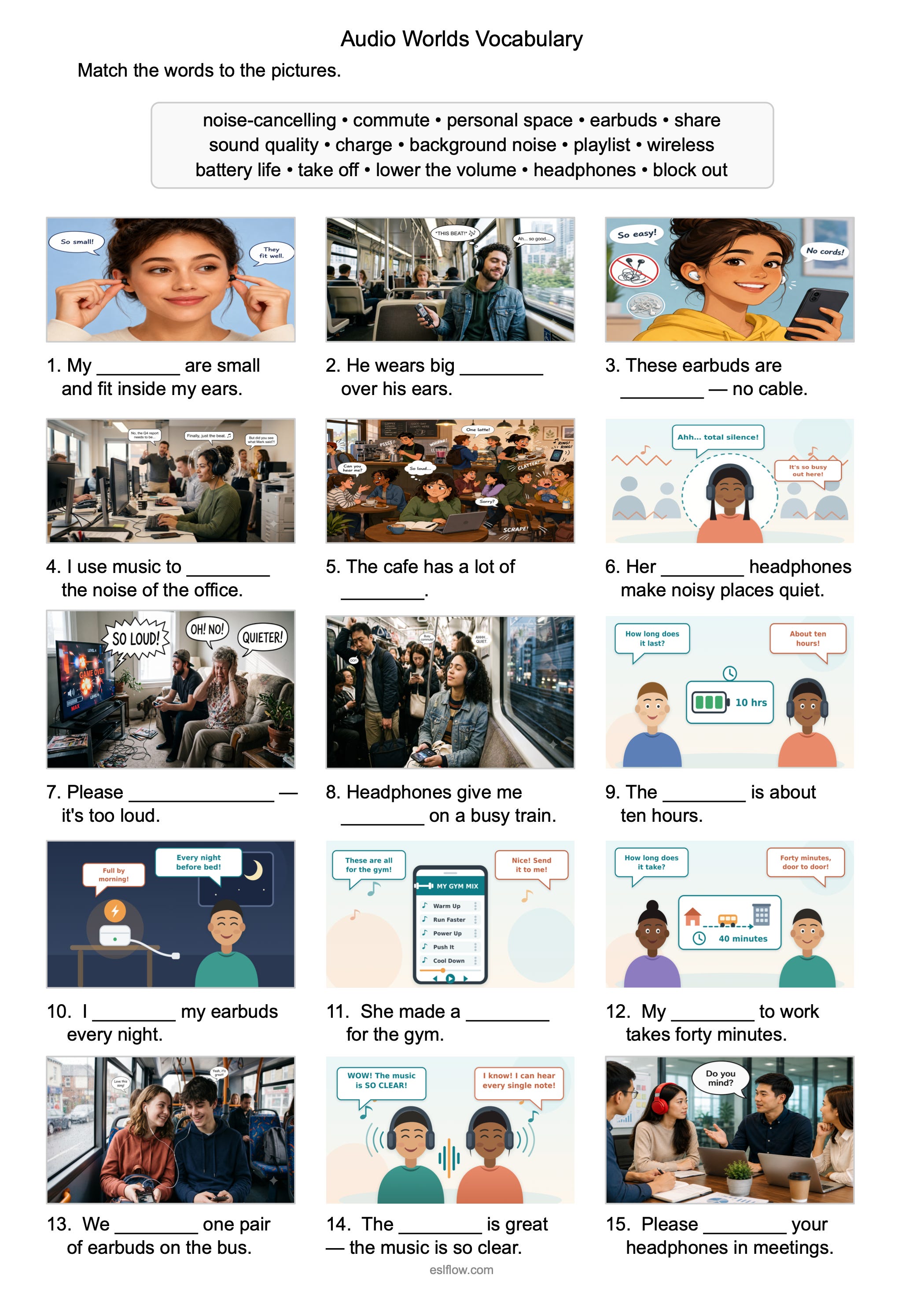
Look around any classroom, bus or cafe or anywhere. More than half the people you see are wearing earbuds. My students use various forms of earbuds and headphones. They talk about the advantages and disadvantages of brands, battery life and playlists. Often when I do listening exercises, I tell students to do it by themselves — 90% have some form of “hearable”. The other few put the phone to their ear. They can do the listenings at their own speed, in their own time. It’s very cool.
The same goes for the word “ultra”. It started on food labels and now it’s on beer, trash bags, sneakers and phone upgrades. It can be praise — ultra-thin, ultra-fast — or a warning, as in ultra-processed snacks. Now people are calling hours of scrolling “ultra-processed time”. English is a living language, and “ultra” is living proof.
So these two lessons are exploring trends. Audio Worlds looks at how we manage sound and attention now — the private bubble on a crowded train, headphone manners at work, what all those listening hours do to our ears. Living Ultra follows one word as it spreads through the culture: from ingredient lists to marketing to the way people describe time spent on their phones. These lessons give students language as it’s lived. I liked that phrase so much I’ve just made it the new tagline of my website.

Audio Worlds — Listening & Speaking (pre-intermediate and intermediate)
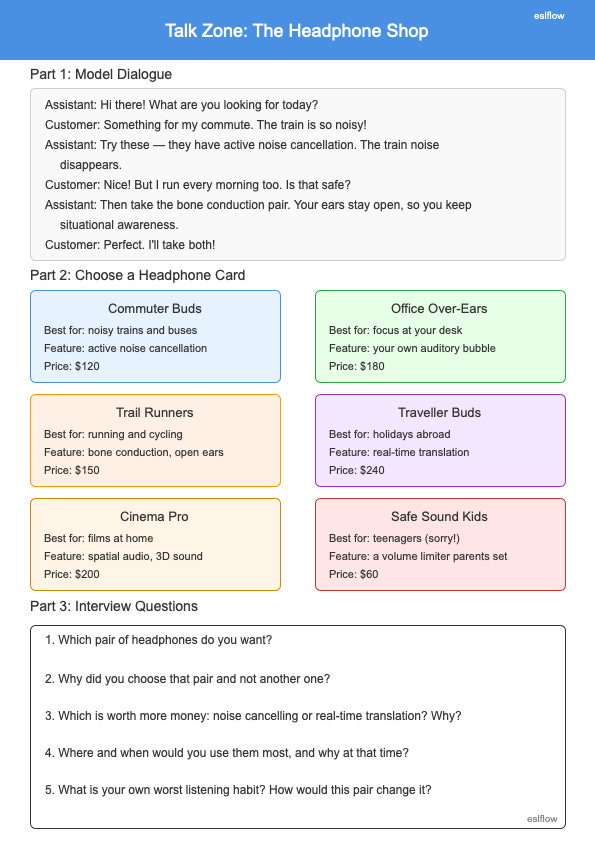
A complete new lesson about the hearable devices. The pre-intermediate package covers earbuds and headphones in various daily scenarios: exercising, the commute, the gym and the open-plan office. There’s a dialogue exploring types of devices (”Three Pairs of Headphones”), a “used to” role play that looks back at CD players and tangled wires, and a final project where groups design and pitch their own audio device to a room of student investors.
The intermediate version keeps the same spine but moves into the language people now use around this technology: auditory bubbles, bone conduction, spatial audio, real-time translation, situational awareness. A mini-lecture about audio worlds includes some startling numbers — fifteen-to-nineteen-year-olds average 88 hours of listening a month, and 41% of regular users report hearing symptoms. Critical thinking exercises explore: headphones and public spaces, the future of “hearables”, and hearing health, and a second conditional role play imagines where the technology goes next.
Living Ultra — Reading & Writing (pre-intermediate and intermediate)
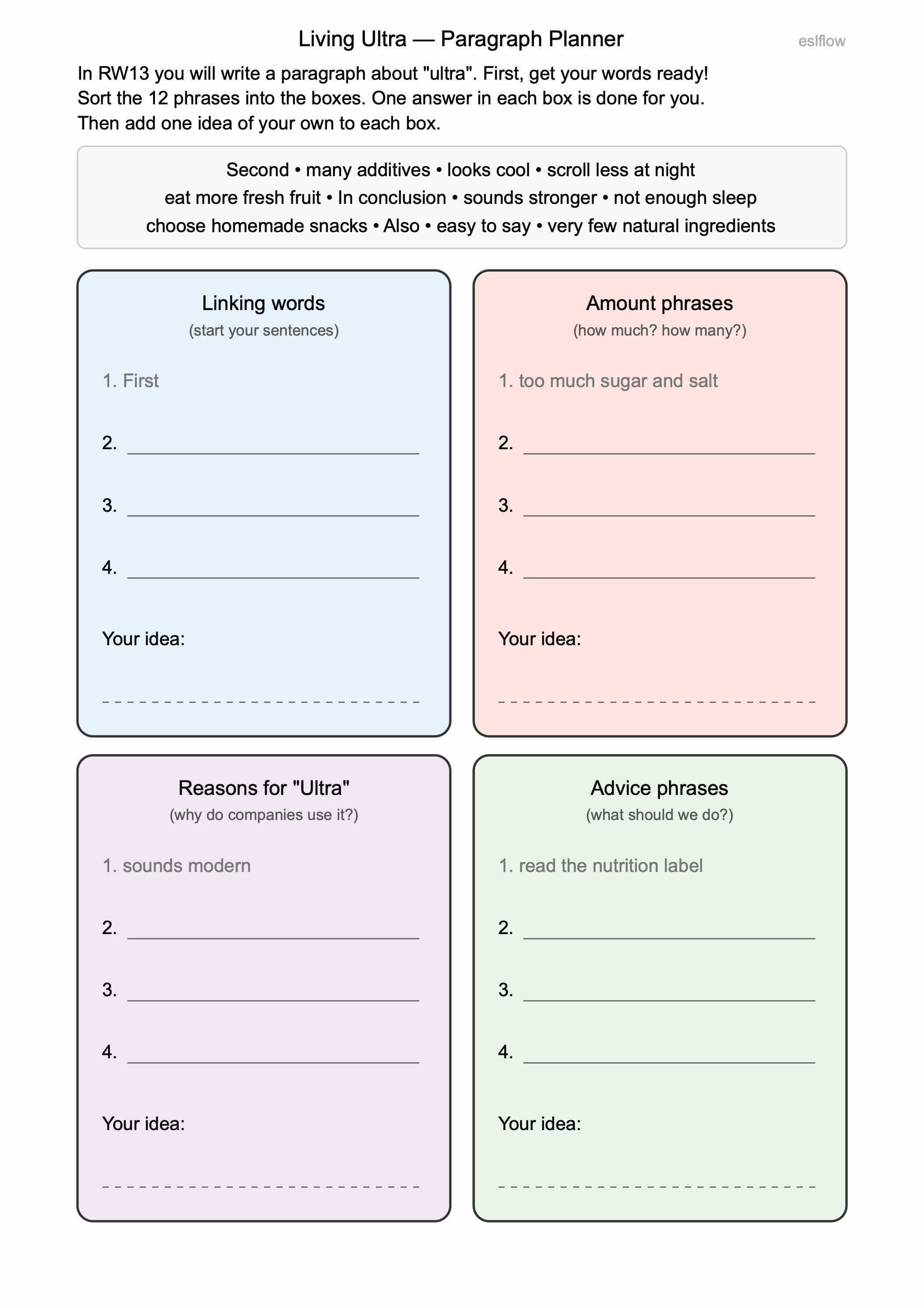
A reading and writing lesson built around a recent New York Times Magazine exploration of the widespread use of the “ultra” prefix: it’s not just food — our whole world is becoming “ultra-fied”. Students follow the word “ultra” from snack packets to marketing buzzword, and weigh positive vs negative uses: Is the “ultraprocessed” tag meaningful? Is a $200 “Ultra” upgrade worth it for a a slightly better camera?
The pre-intermediate focuses on quantifiers and comparatives; the intermediate version on the passive voice — snacks are engineered, feeds are designed to be consumed — with an adapted 481-word article, comprehension work, and scaffolded paragraph writing to finish.