
Note: Paid subscribers can download all 4 complete lesson packages at the end of the post.
Modifying content for different levels has always been an almost intractable problem. Every teacher knows the trap: you take a good intermediate lesson and hand it to a weaker class — and it doesn’t work. Leveling isn’t just vocabulary substitution. It’s different grammar, shorter sentences, more support on the page, different task types. Done properly, it means building the lesson twice. For thirty years, that was usually a good reason not to do it at all.
So I’ve started asking Fable 5 — the AI I work with — for something different. Not a lesson, but a workflow: a repeatable process for producing the same lesson at elementary, pre-intermediate and intermediate. The workflow keeps one shared spine across levels — the topic, the characters, the scenario, the anchor vocabulary — and changes only the language load. The intermediate answer key even flags which pre-intermediate words are recycled as known vocabulary, so a class that did the easier version arrives at the harder one with a head start.
The same shift — asking for a process instead of a product — solved a smaller, older problem. I had some listening tests for my university classes that were badly out of date — paper format, old content. I asked Fable to convert one into a Google Form, and it did. For another, I asked it to convert the test, update it, and make it easier with contemporary content. It handled both tests. My only jobs were recording the audio from the scripts it gave me and adding some images. A task I’d been putting off for years took an afternoon — because I asked for a process, not a one-off.
The Beverage Wars below is the multi-level workflow’s first full outing: the same business lesson, built twice.

The Beverage Wars — One Lesson, Two Levels
A completely new lesson about the fight for the world’s drinkers — brand rivalry (Coke vs Pepsi), a McDonald’s–Red Bull partnership, and supermarket brands undercutting the famous names.
It’s filed under business English, but the territory is wider than that. The lesson keeps circling the question of how people actually choose things now: whether brand loyalty still means anything when consumer trends shift within months, driven largely by social media; what a celebrity endorsement is worth once the celebrity moves on; how innovations occur in a saturated market. In the dialogue, a student who has bought the same cola for years argues it out with classmates who try whatever appears on social media that week. Students don’t need the topic explained to have opinions here — they are the drinkers being fought over.
Both packages follow the same format; the language level moves from more accessible to more challenging.
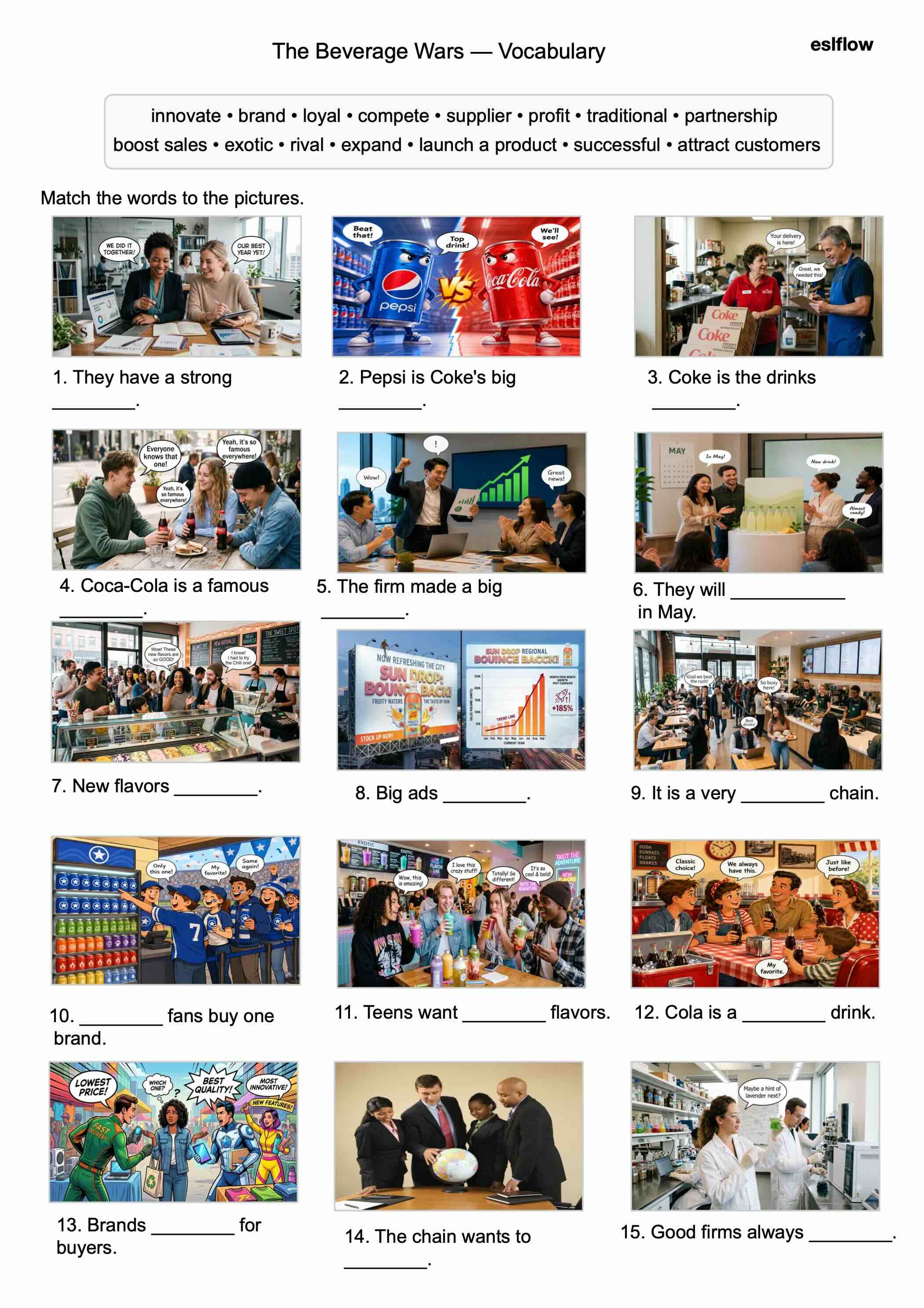
The pre-intermediate version (A2–B1) runs on foundation vocabulary — rival, supplier, brand, launch a product, boost sales, loyal — with a word formation role play, a pie chart worksheet, and a “Launch Your Own Drink” project to finish.
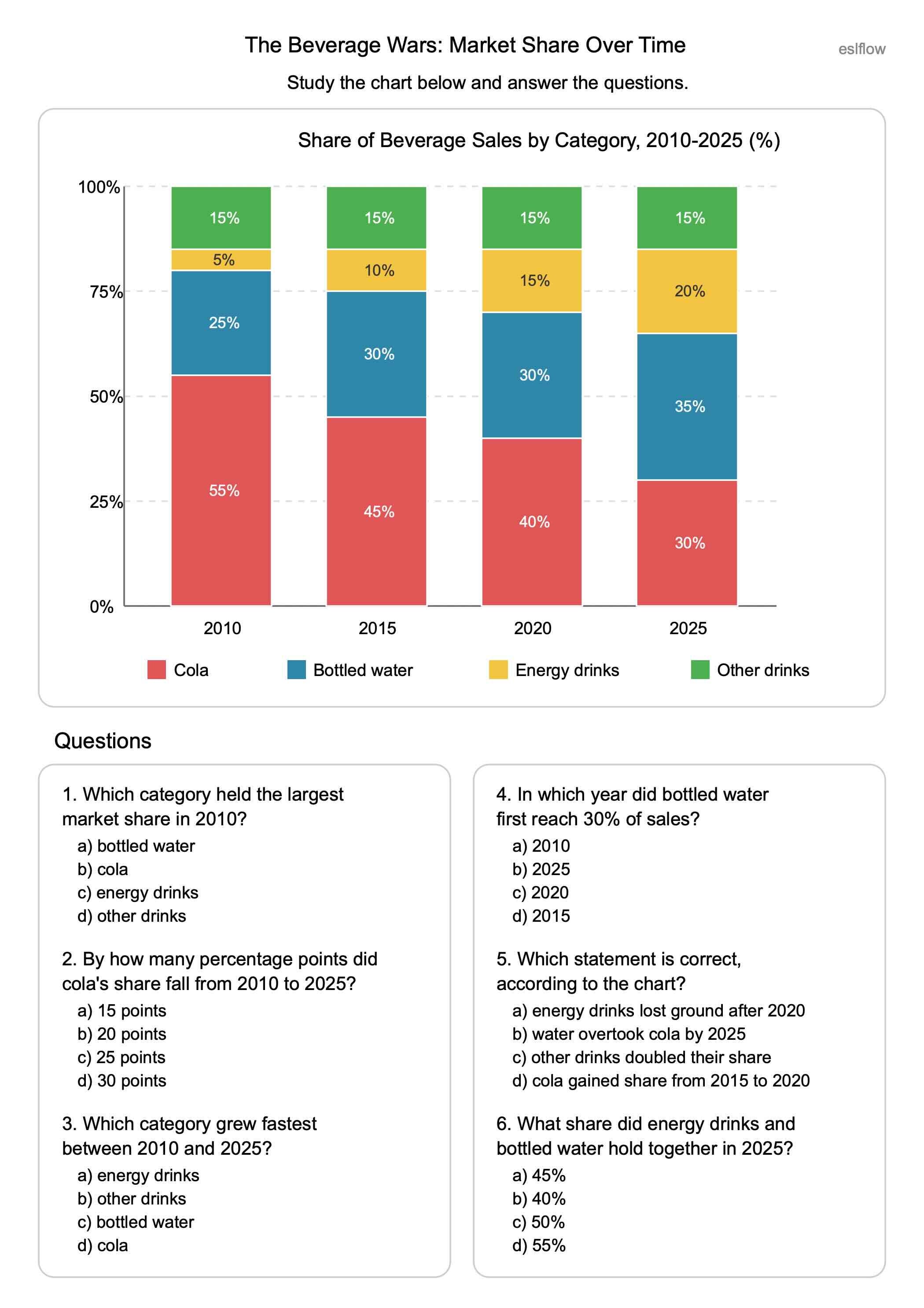
The intermediate version (B1–B2) recycles those words as known vocabulary and steps up into harder business language — market share, flagship product, gain a foothold, undercut, phase out, joint venture — with a reported speech role play, a market-share-over-time graph, and a Beverage Strategy Meeting talk zone. Its critical thinking sheets shift from brand loyalty and new products to brand strategy, market disruption and consumer psychology.
Cross-Cultural Communication
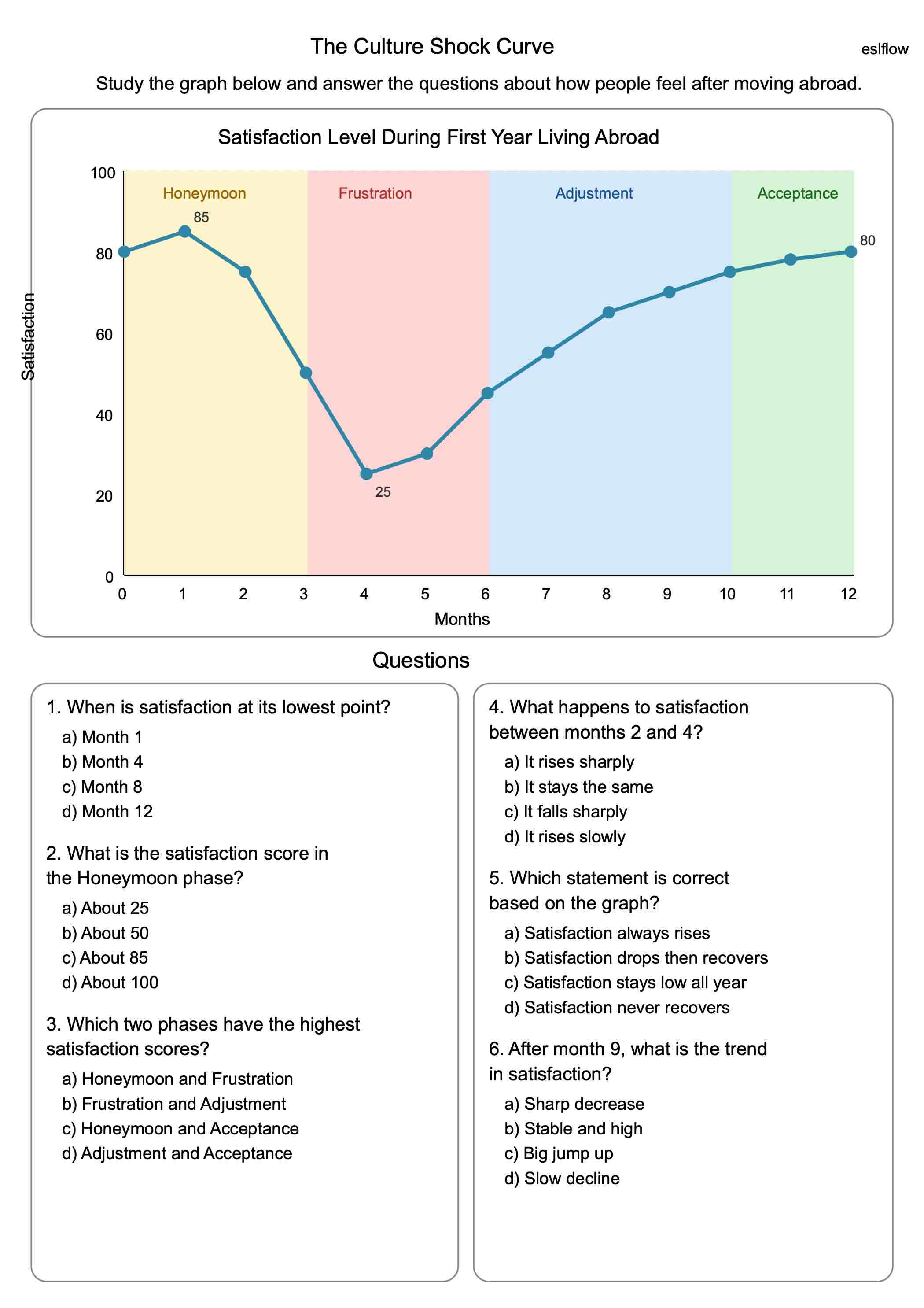
A comprehensive makeover of one of my longest-serving topics, for pre-intermediate and above. Sub-topics include stereotypes and assumptions, cultural values and beliefs, and cultural identity. There’s a new dialogue set in Shanghai, a culture shock curve graph worksheet, a comparatives grammar role play (featuring a returning exchange student), and an International Welcome Desk talk zone. Audio for the dialogue, discussion and pronunciation exercises is included.
The Future of Work — Adapting and Skills
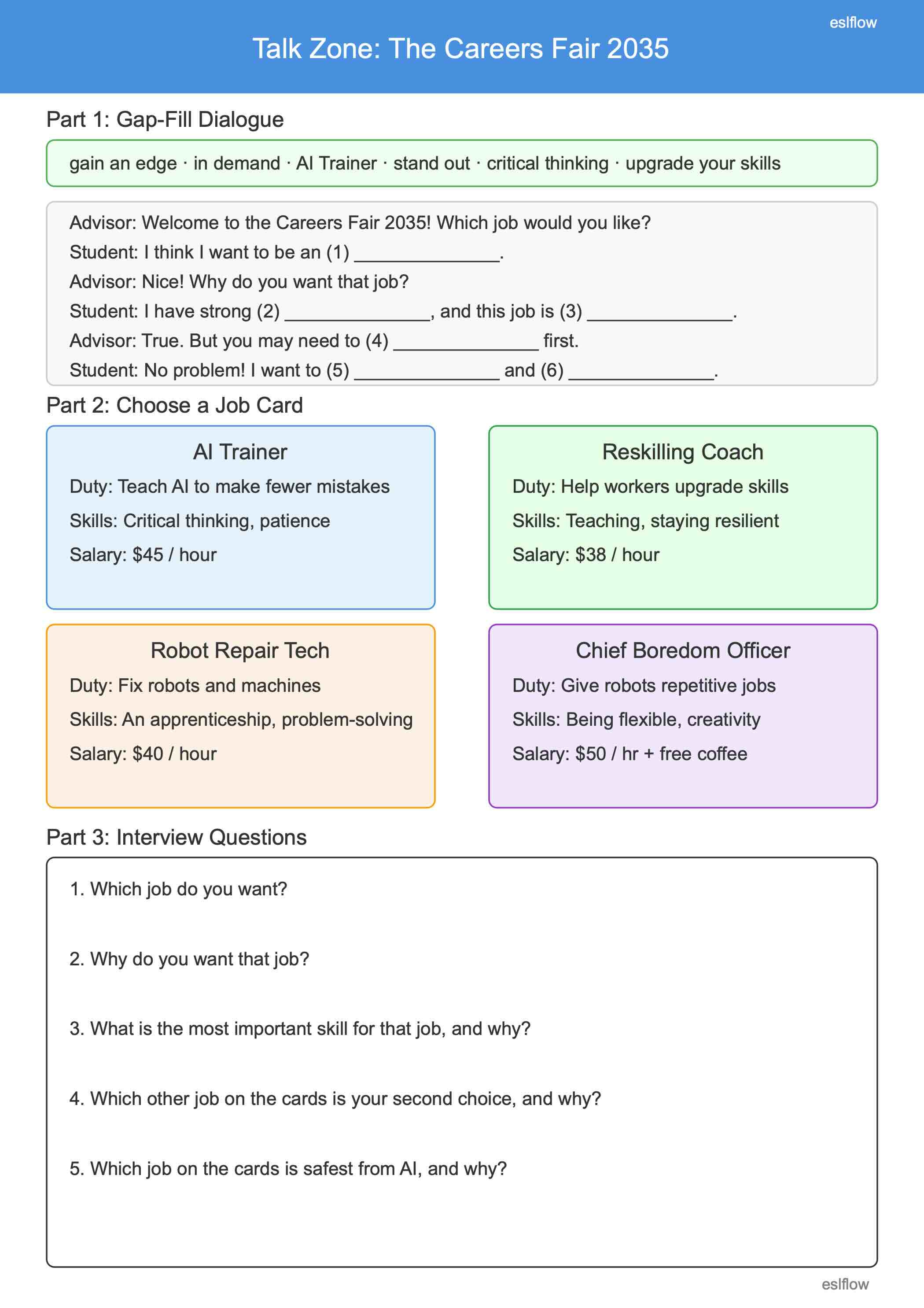
Updated and expanded, for pre-intermediate to intermediate learners. The vocabulary is the language of adapting — reskilling, upgrade your skills, gain an edge, stand out, resilient — and the package now includes a lecture version of the dialogue, a Careers Fair 2035 talk zone, and paired career-advice role plays. For university language majors there’s a parallel set — a Language Careers dialogue, an automation-risk graph, and a Language Careers Fair — built on the same vocabulary but set in the world of translation and interpreting.
One thing to note: the workflow makes the two packages consistent, but it can't tell me if I've got the levels right. I think I have. The classroom will settle it, and I'll update them as I find out.
