Already a paid subscriber? Jump straight to the download → — all the files are waiting below. First time here? Read on: the post explains what's inside and why it works.
For decades, education business models have been built on stifling innovation — protecting rigid profit pipelines. By reissuing dated, generic content, they were blocking creativity in content and dictating workflow and organization. Over time, this generic, outdated material became disconnected from the world students actually live in. AI has blown the doors off. The gatekeepers are gone. The bottlenecks are gone. And creators who move fast can now build what classrooms have always needed.
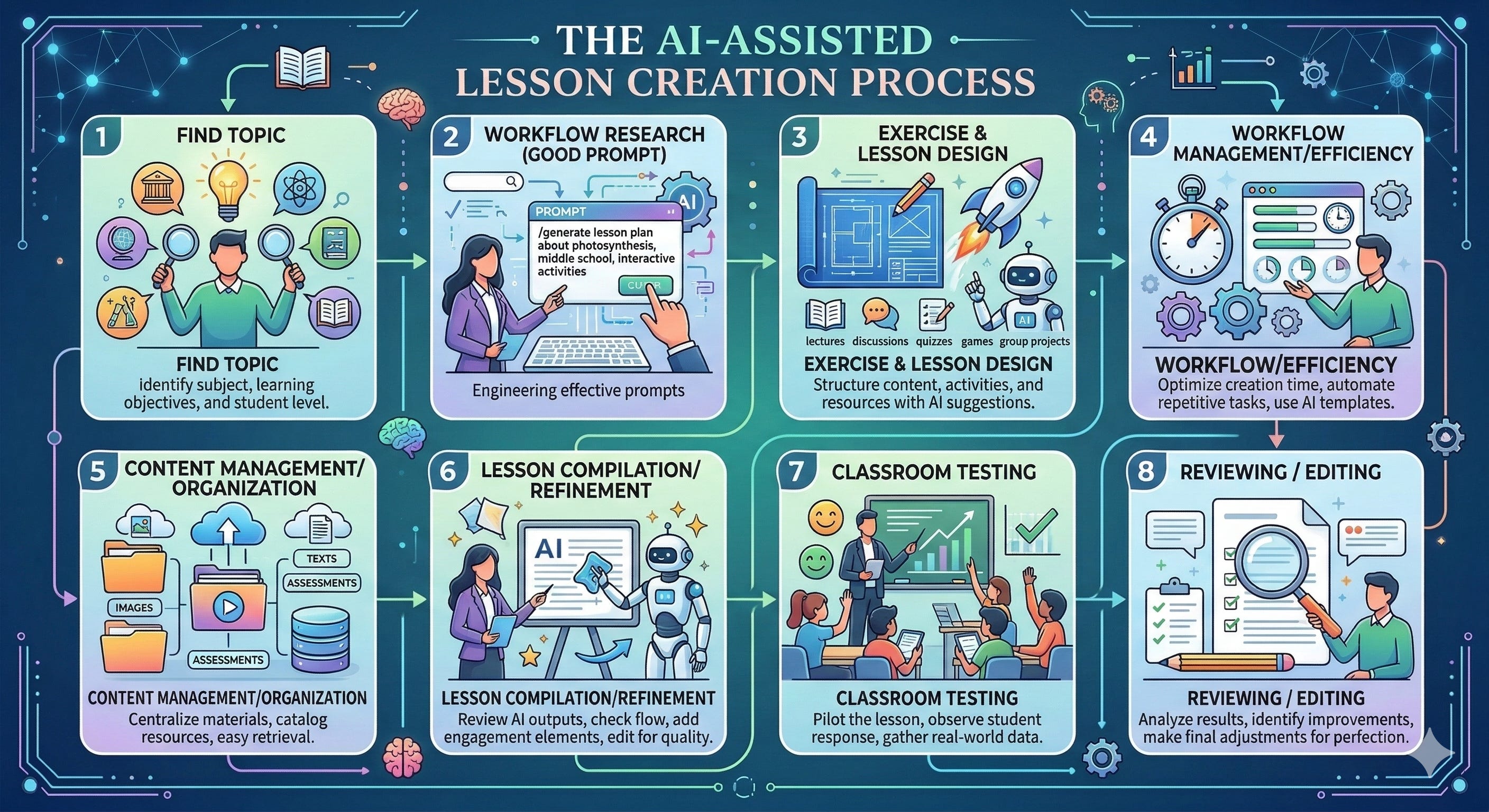
Now the whole content creation process can be managed by one person. From my experience so far, the workflow looks like this: topic research (good prompt), exercise and lesson design, workflow management and efficiency, content management and organization, lesson compilation and refinement, classroom testing, reviewing and editing. I use Claude Projects, Skills and Cowork for most of the process.
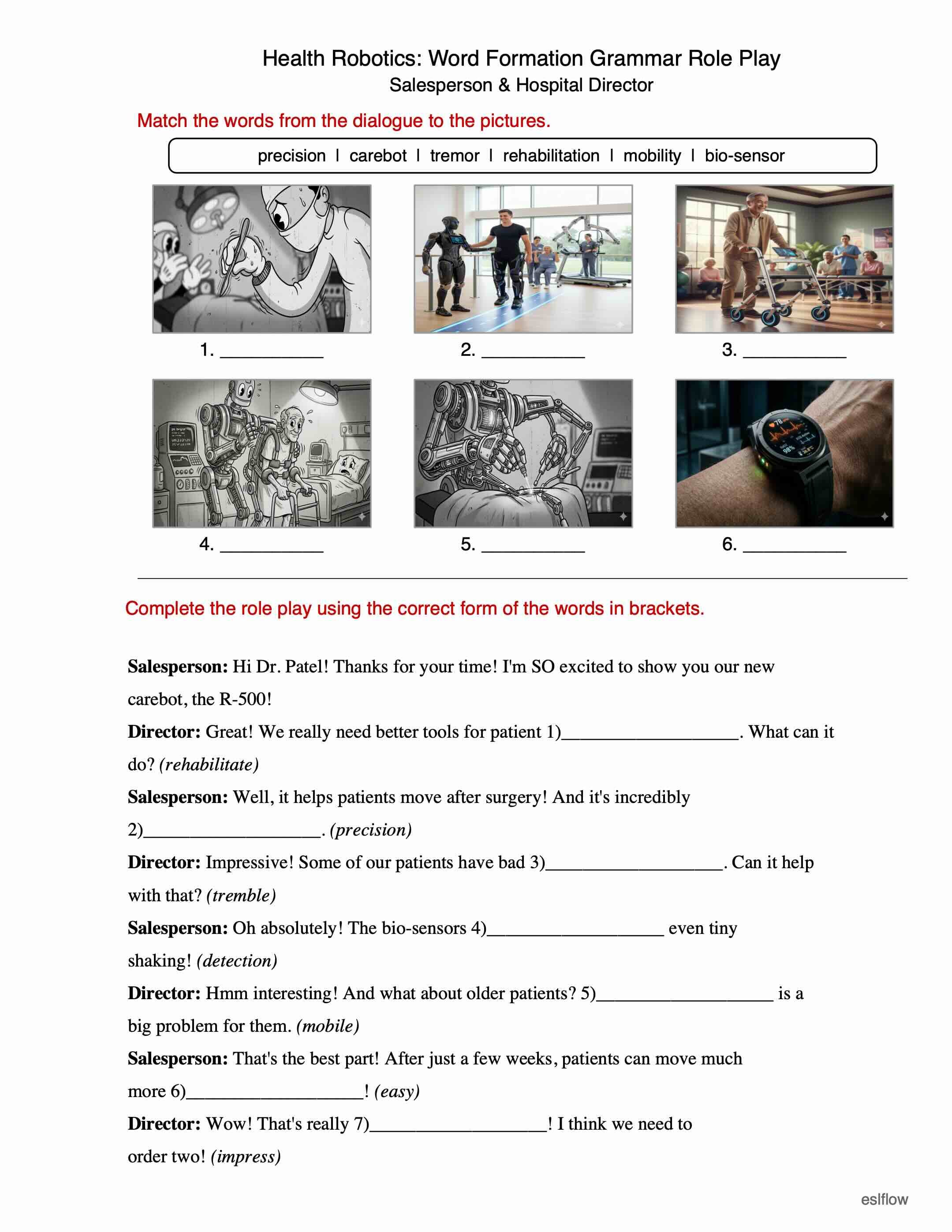
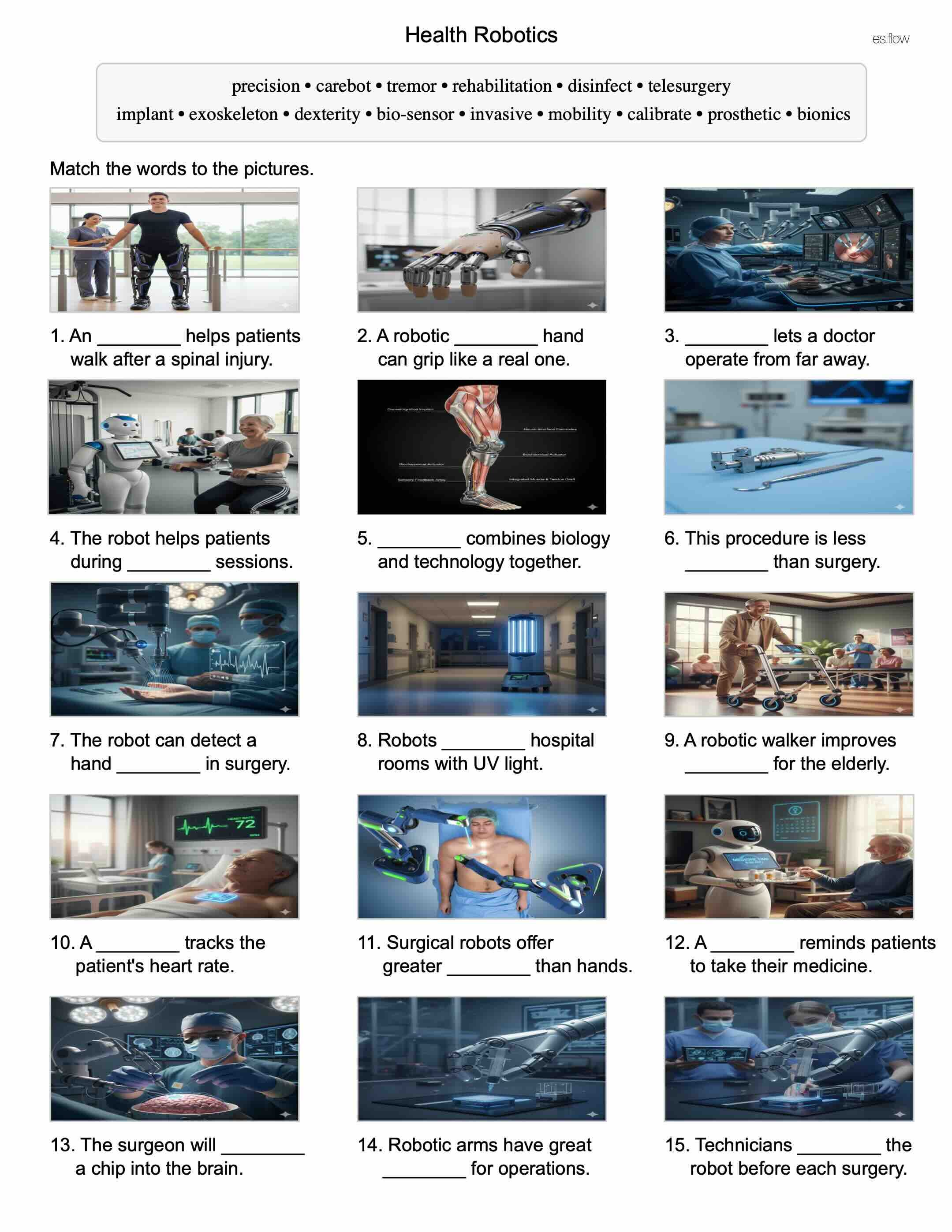
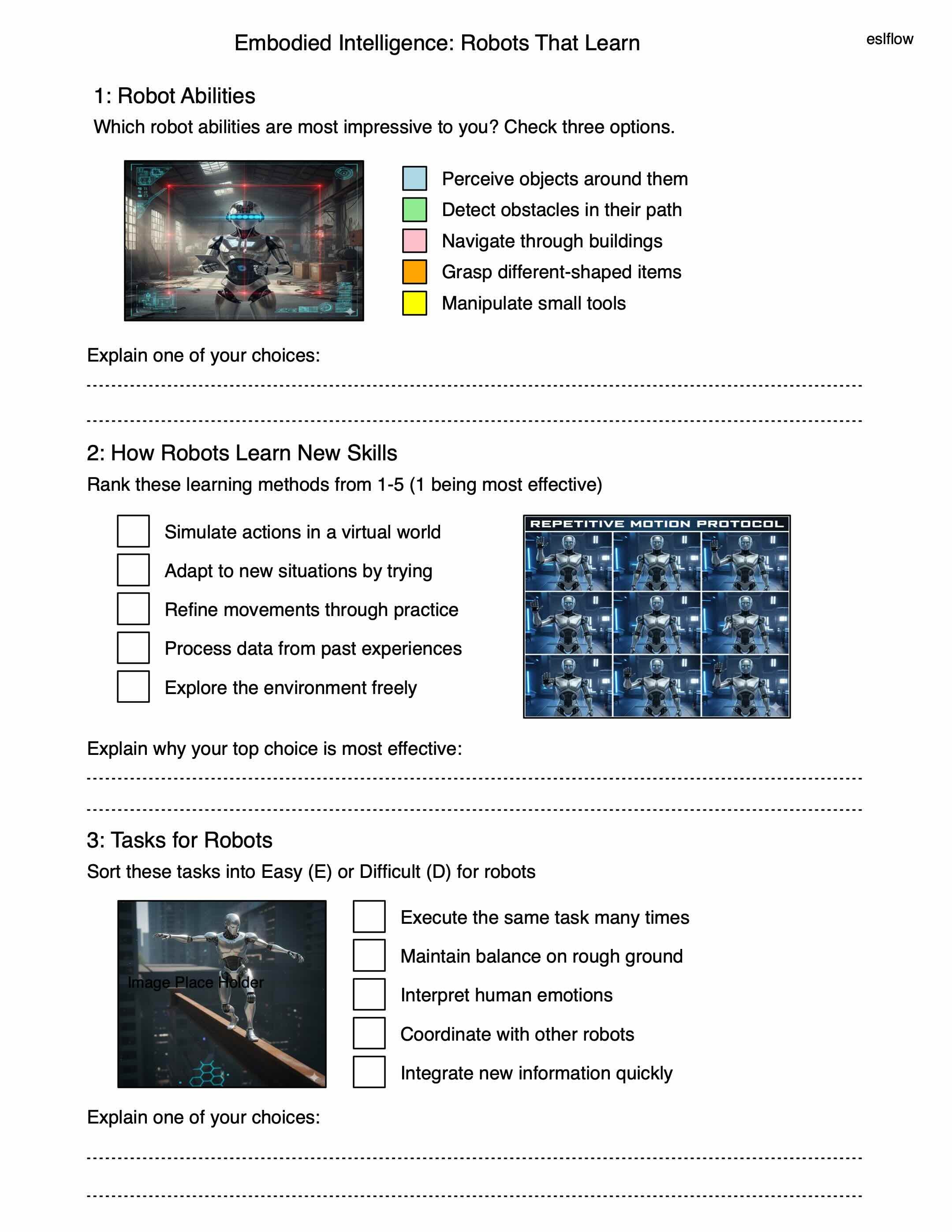
This post includes two brand-new lessons — Embodied Intelligence and Health Robotics — plus a fully updated Cybersecurity lesson. Health Robotics gives students an accessible entry point into the vocabulary of telesurgery, exoskeletons, carebots, and bionics — terms that land in the headlines every week. Embodied Intelligence is a more challenging lesson that takes students deeper into robots that perceive, navigate, and learn through physical interaction, from warehouse floors to Mars rovers. The refreshed Cybersecurity lesson now tackles AI-driven threats like deepfakes, voice cloning, and social engineering bots alongside core concepts like encryption, firewalls, and VPNs.
This is what "the gatekeepers are gone" actually looks like. A year ago, none of these topics — carebots and exoskeletons, robots that learn by moving, AI-driven deepfake scams — sat in any ESL textbook, and under the old publishing economics they might have waited years for an update cycle that never came. Where that model favoured generic, slowly updated content, a single teacher with AI can now build current, headline-relevant lessons and put them straight in front of students. That redistribution of capability is what the title is pointing at.

Every lesson follows the usual sequencing — brainstorming through vocabulary, listening, grammar role plays, collocations, data interpretation, pronunciation, and speaking activities. Each comes with a complete binder of exercises, full answer keys, and suggested teaching sequences. Classroom testing serves as the reality check and proving ground. For example, that’s how I discovered the Embodied Intelligence lesson is more challenging than I originally thought.
Health Robotics Visual Vocabulary
Embodied Intelligence: Robots that Learn
Health Robotics Role Play