This Week’s Focus: The Matcha Tea Phenomenon (listening/speaking)
Why are young people worldwide paying premium prices for bitter green powder? The answer lies at the intersection of ancient tradition, health consciousness, and social media aesthetics—making it an ideal topic for language learners.
What’s Inside:
This lesson explores the matcha phenomenon through visual vocabulary exercises, data visualization tasks (infographic, heat map, and line graph), grammar practice, and cross-cultural exploration. Students will compare authentic ceremonial matcha with trendy café drinks, analyze market growth charts, and debate whether the “matcha boom” helps or harms traditional culture. Several activities include both easier and pre-intermediate versions for mixed-ability classrooms.
Download the PDF to see the complete contents.

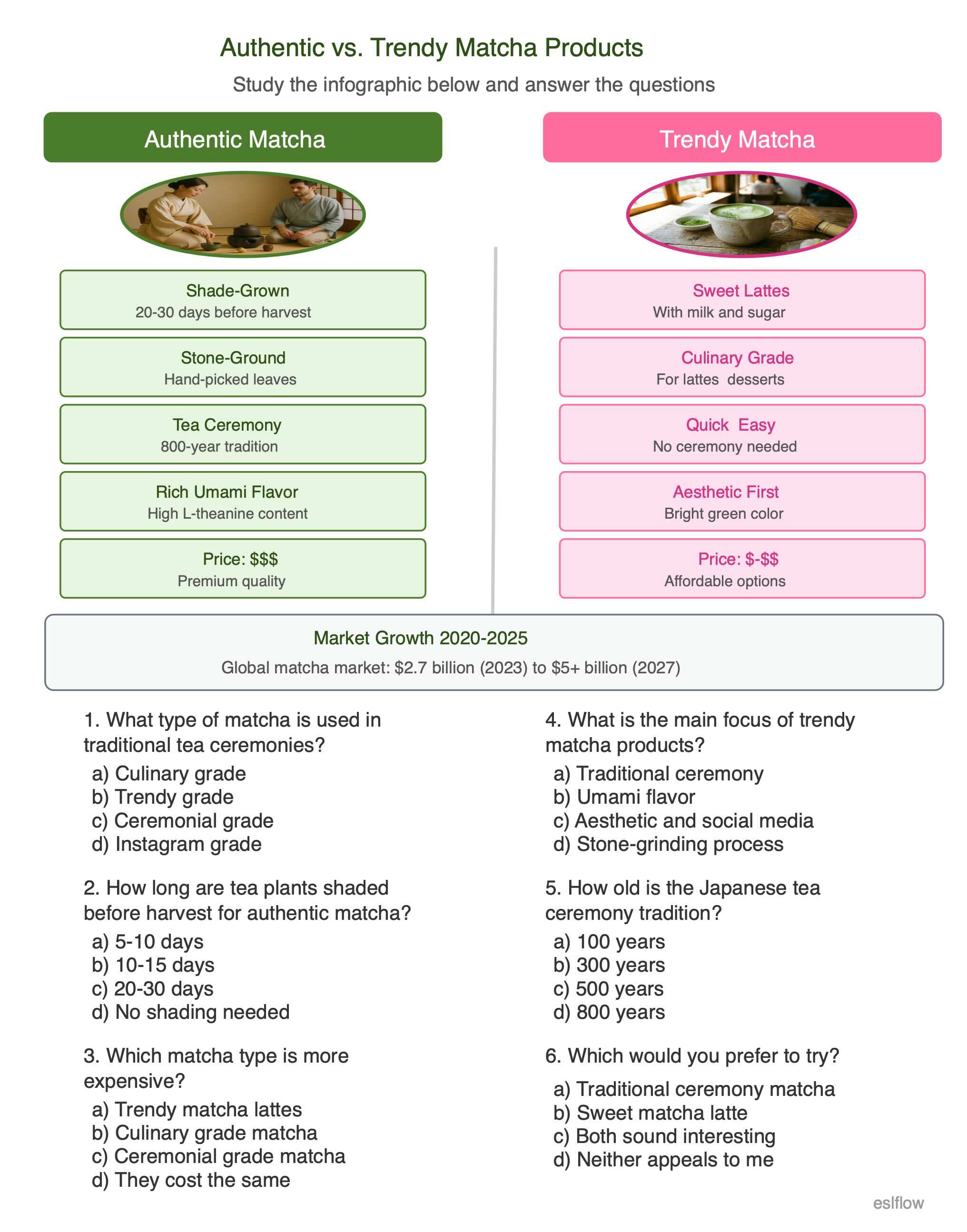
Visual Vocabulary
Students see matcha everywhere—in coffee shops, skincare products, and all over social media. Learning these words helps them explore and understand a viral phenomenon that touches many aspects of daily life, from what they order at cafés to what they put on their skin. The vocabulary covers both ancient Japanese traditions and the modern lifestyle trend, helping students become familiar with a topic that keeps appearing in conversations, menus, and online.
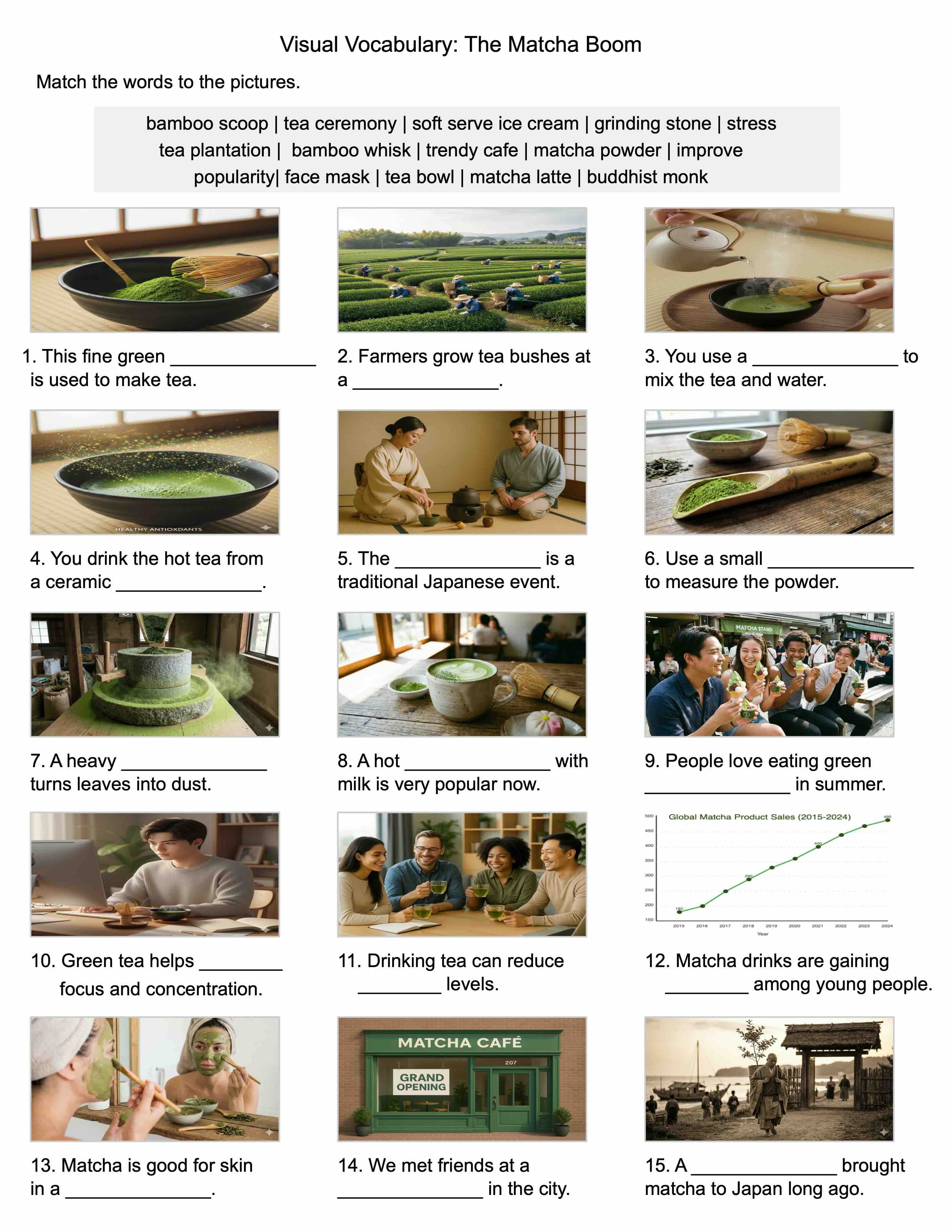
Dialogue: Authentic vs. Modern Matcha
Matcha lattes are everywhere, but are they authentic? This dialogue builds vocabulary around food, ingredients, and opinions through a debate most people have had: traditional culture versus modern culture.
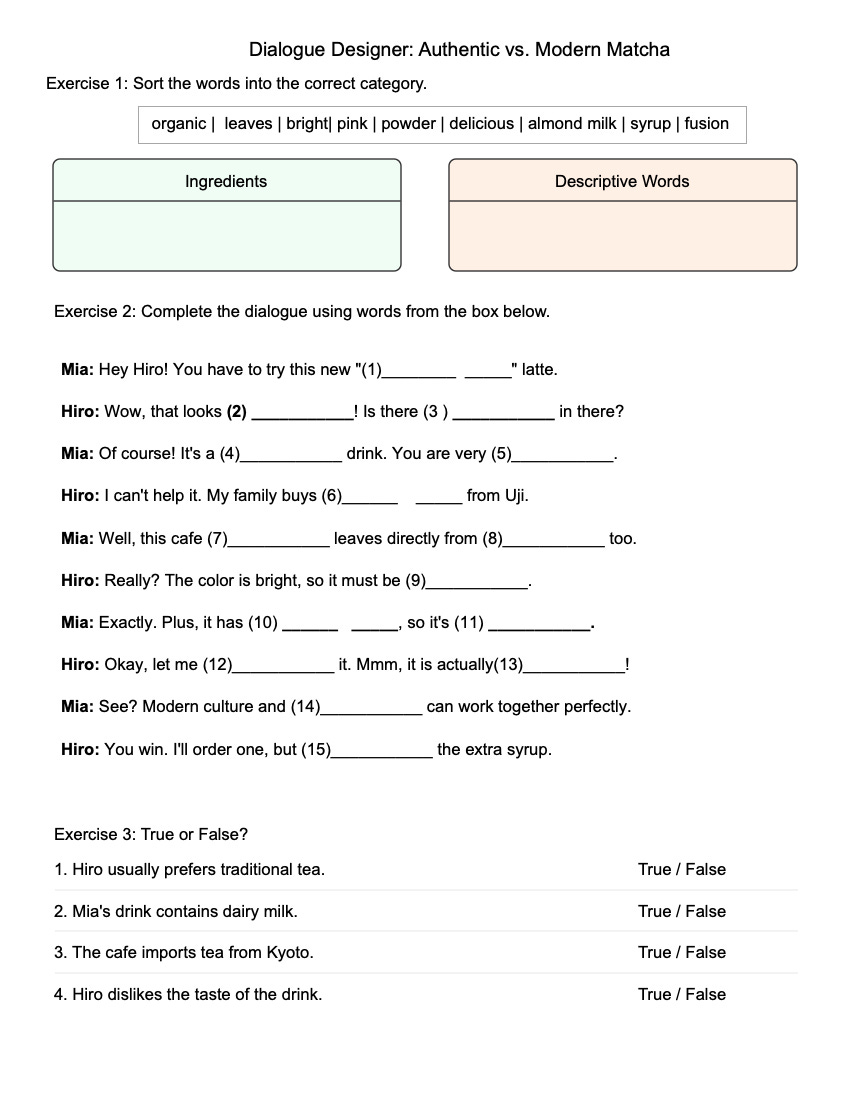
Traditional vs Modern Matcha Infographic
This infographic helps students learn new vocabulary through comparison and contrast. Words like “ceremonial grade,” “culinary,” and “umami” gain meaning within the context of traditional culture versus modern trends.