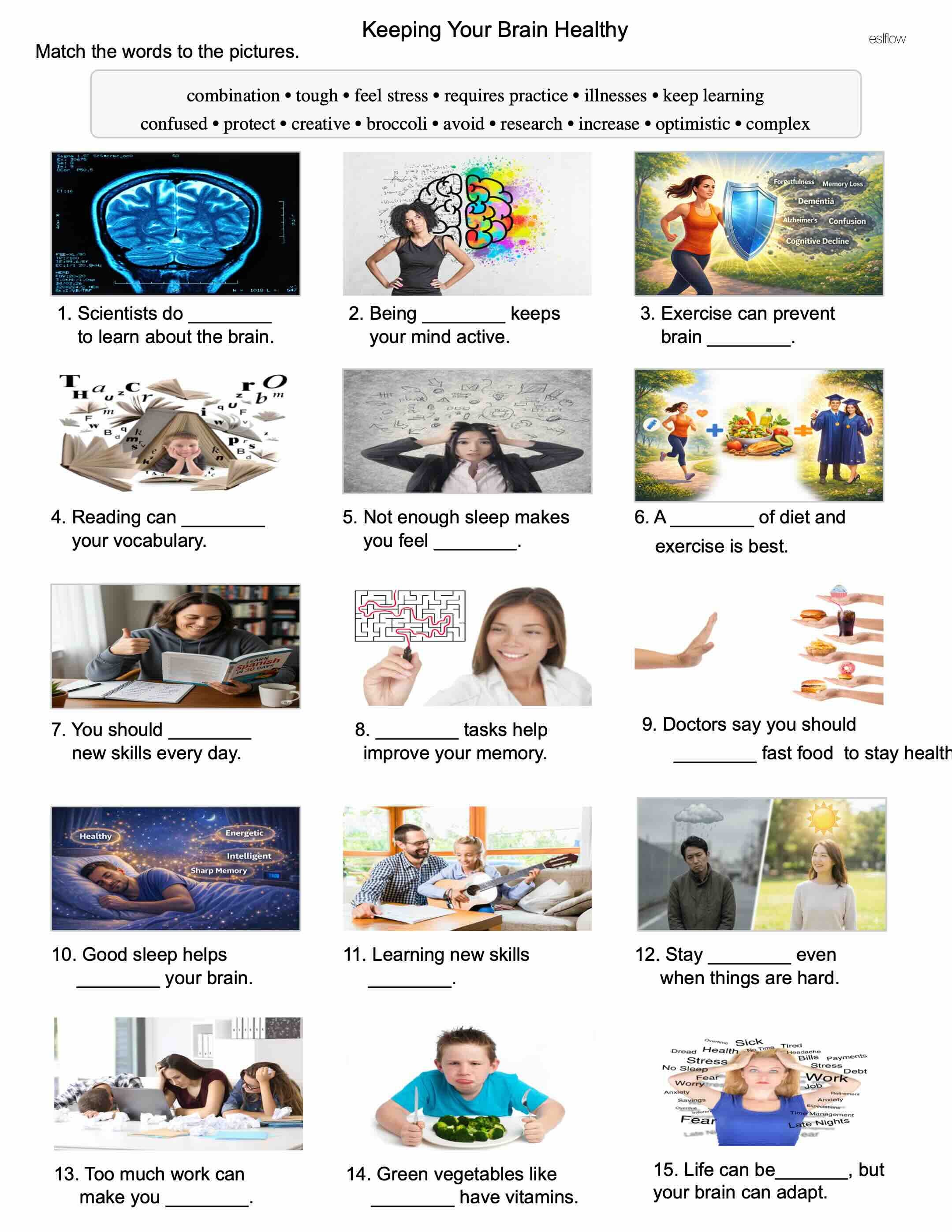
Keeping your brain healthy and understanding what you eat—these aren’t just specialized scientific interests anymore. They’re part of how people live now. Students are choosing foods based on how they’ll feel an hour later, not just how they taste. They’re hearing about brain fog, sleep optimization, and focus hacks in casual conversation. The line between “health advice” and “everyday small talk” has blurred.
And the two topics are connected in ways people actually discuss. Why does skipping lunch make it hard to concentrate? What should I eat before an exam? Why do certain foods make me feel sluggish? These questions sit at the intersection of what we put in our bodies and how our minds perform—and students want the vocabulary to talk about both.
This double lesson explores these subjects the way students already encounter them: as practical knowledge that shapes daily choices. The cognitive science materials focus on brain health, mental sharpness, and habits that support clear thinking. The nutrition section explores how we talk about food, energy, and eating well.

Keeping Your Brain Healthy Vocabulary
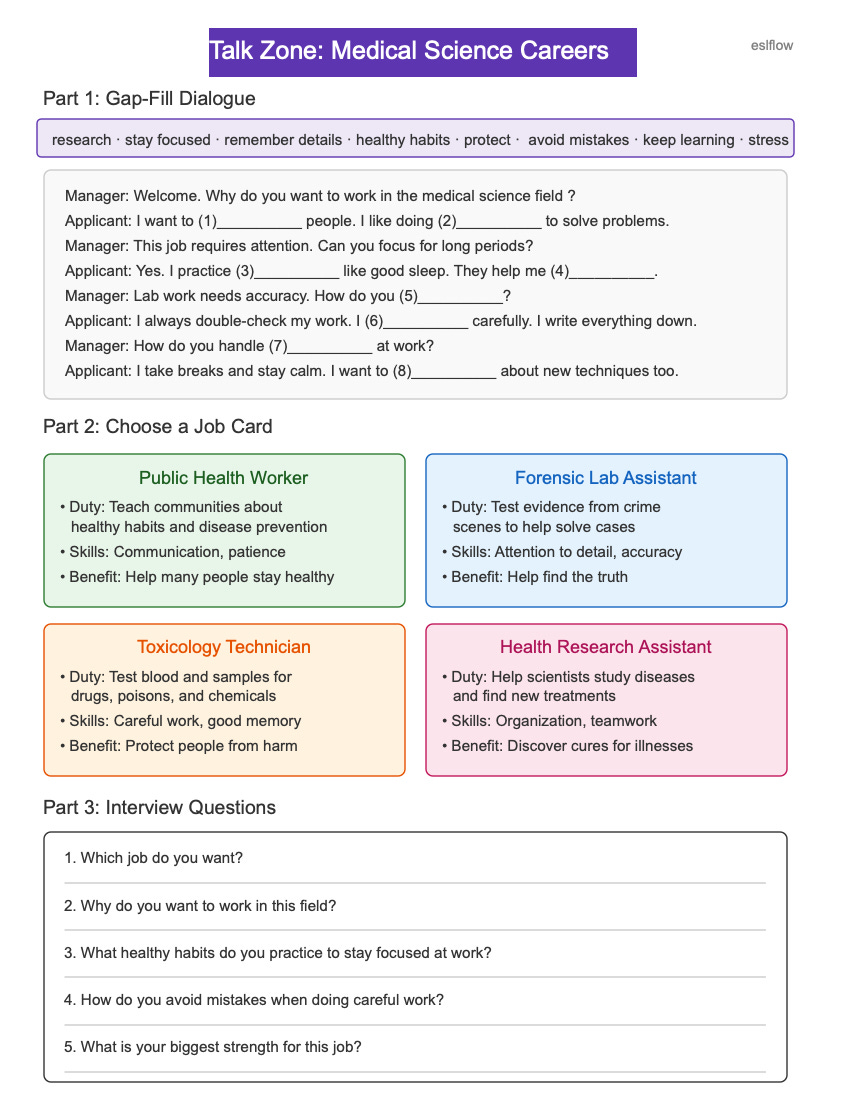
Talk Zone: Medical Science Careers